Development of the Eye Muscle Area WBV
The Eye Muscle Area WBV was developed using a revised genetic evaluation framework that reflects modern Wagyu data and production systems. The Eye Muscle Area EBV and WBV are derived from the same phenotypic records and are expressed in the same units, but differ as a result of updated genetic parameters and higher volumes of data.
Wagyu-Specific Genetic Parameters
EMA WBVs are calculated using:
- Heritabilities estimated solely from an increased Wagyu dataset
- Updated Wagyu-specific genetic correlations
- Full multi-trait models incorporating growth, carcase weight, and marbling traits
This allows EMA to be evaluated in a more correct biological context for Wagyu.
Comparison: EMA EBVs vs EMA WBVs
Figure 1. Eye Muscle Area EBV vs Eye Muscle Area WBV (All Animals)
Description:
The following scatter plot of EMA EBVs (x-axis) against EMA WBVs (y-axis) shown the relationship between EMA EBVs and WBVs across the whole Wagyu population.
A significant change in the statistical model used to calculate Eye Muscle Area WBVs results in significant change in the genetic estimate for this trait in some animals. In general, the WBVs for Eye Muscle Area are positively correlated with EBVs, with high EBV animals tending to be high WBV animals. However, the correlation is only 0.73, meaning that there is significant re-ranking due to the updated Wagyu-specific parameters used in calculating WBVs.
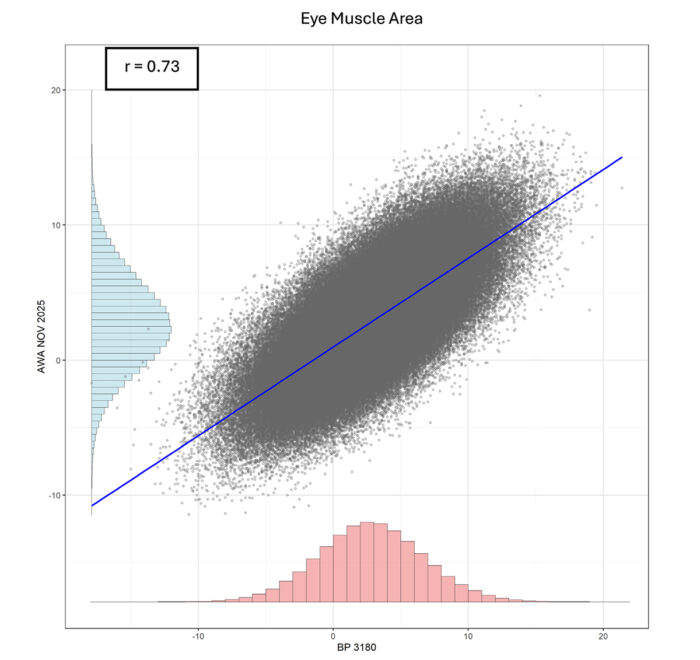
Figure 1. Distribution and Correlation of Eye Muslce Area EBVs (x axis) and Eye Muscle Area WBVs (y axis) for all animals.
Interpretation:
- Animals with high EMA EBVs generally remain high for EMA WBVs
- The moderate correlation indicates meaningful re-ranking for some animals
- Re-ranking is driven by corrected trait relationships rather than data noise
Improved Genetic Relationships Under WBVs
Under the new WBV model, Eye Muscle Area shows:
| Trait Category | Genetic Relationship |
| Growth traits | Positive |
| Carcase weight | Positive |
| Marbling score | Positive |
These relationships better reflect relationships between traits within the AWA database.
What This Means for Breeders
What Remains the Same
- EMA remains a comparative genetic measure of Eye Muscle Area
- Higher values indicate genetically larger eye muscle area
- Accuracy should guide confidence in selection decisions
What Improves
- Better alignment with observed progeny outcomes
- Reduced bias against growth-oriented animals
- Improved ability to select eye muscle area and growth
- More biologically realistic rankings across the population
Why This Change Is Only Possible Now
The transition from EMA EBV to EMA WBV is enabled by:
- A large increase in Wagyu-specific EMA records
- The ability to re-estimate parameters using Wagyu-only data
- Independent AWA genetic evaluation capability
Conclusion
The replacement of the Eye Muscle Area EBV with the Eye Muscle Area WBV represents a substantial technical improvement in how eye muscle area is evaluated in Wagyu cattle. By correcting trait relationships and embedding EMA within a Wagyu-specific multi-trait framework, WBVs deliver a more accurate and biologically meaningful assessment of carcase muscling.