
Marble King Wagyu Crowned Grand Champion at 2026 WBBC

Marble King Wagyu Crowned Grand Champion at 2026 WBBC

Victorian based Wagyu brand, Marble King Wagyu by Penstock Pastoral has been crowned Grand Champion at the 2026 Wagyu BrandedBeef Competition (WBBC), with the awards presented during WagyuEdge’26, the largest conference ever hosted by the Australian Wagyu Association (AWA).
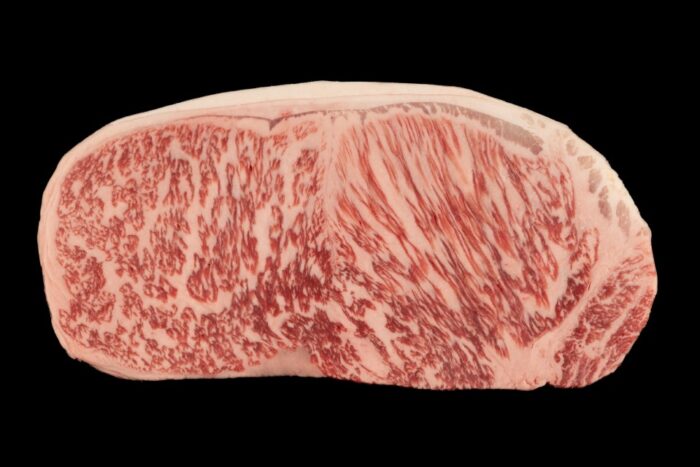
Marble King Wagyu

Marble King Wagyu’s Grand Champion entry

The 2026 WBBC attracted 80 entries from 49 brands and 27 companies, judged across five distinct classes:

  • Class 1: Fullblood Wagyu
  • Class 2: Purebred Wagyu
  • Class 3: Crossbred Wagyu
  • Class 4: Open F1 Wagyu
  • Class 5: Commercial Wagyu (Marble Score 5–7)

Now in its 15th year, the WBBC remains Australia’s longest-running branded beef competition of its kind, renowned for its industry relevance, scientific integrity, and rigorous independent judging.

AWA Chief Executive Officer Dr Matt McDonagh said the competition continues to set the standard for beef quality assessment.

“The Wagyu Branded Beef Competition is the pinnacle of beef industry competitions when it comes to meat quality assessment and scientific rigor,” Dr McDonagh said.

The Grand Champion and Class 1 Fullblood Wagyu Champion entry, bred by Lapins Lament Wagyu and processed by Central Agri Group (VIC), was a 430-day grain-fed steer targeting a 450–475kg carcase weight.

The entry achieved a score of 1051, with judges describing the Marble King entry as, “Succulent and buttery with a melting texture, delivering lasting juiciness, rich umami and delicate, earthy, caramel-like flavour notes.”

Raised in Victoria’s Acheron Valley, a cool-climate, high-country region known for its misty mornings, fresh mountain air and fertile pastures, the Marble King Wagyu program reflects the strong link between environment, production systems and eating quality outcomes.

The product is primarily export-focused (85%), reinforcing Australia’s strong position in global premium beef markets.

Marble King’s, Martin Donohue was both shocked and excited by the win and considered it beginners luck.

‘We are flattered and honoured to have won and hope to back this up in future. I am very thankful to all the people that helped us early on when we set out to breed Wagyu cattle. We didn’t know a lot about it and people were very, forthcoming with ideas when we started out, and for the guidance with our genetics and feeding, when we started out, it has paid off, so we are very appreciative.

The Reserve Champion title was awarded to Signature Series by Mayura Station, a highly regarded program delivering consistent high-quality Wagyu.

The Mayura entry, a 300-day grain-fed steer, achieved a score of 1048, with judges highlighting the “Incredible tenderness and melting texture, with sustained succulence, buttery umami richness and a silky clean finish.”

Chief Steward Dr Alex Ball emphasised the importance of the WBBC’s robust methodology.

“The quality of Wagyu produced by Australia’s leading brands continues to lift the bar for eating experience globally,” Dr Ball said.

Key features include:

  • Deidentified sample coding to remove bias
  • Standardised cut-up and cooking protocols
  • Genomic and fatty acid analysis
  • Objective marbling measurement via MIJ technology
  • Blind taste testing by expert panels
  • Advanced statistical modelling

Dr McDonagh said the competition plays a vital role in driving continuous improvement.

“Each year, the standard of entries increases significantly as brands strive to deliver the highest possible quality outcomes. I look forward to seeing the continued drive of the Wagyu sector towards world-class production.”

With strong international demand and ongoing innovation, Australian Wagyu is cementing its place as one of the world’s most sought-after luxury foods.

FULL 2026 WBBC RESULTS

CLASS ONE CHAMPION FULLBLOOD WAGYU, sponsored by WiseRepro: Marble King Wagyu, By Penstock Pastoral, Breeder Lapins Lament Wagyu

CLASS TWO CHAMPION PUREBRED WAGYU, sponsored by Bovine Dynamics: Master Selection, By Mort & Co Ltd, Breeder Muirhead Pastoral Co

CLASS THREE CHAMPION CROSSBRED WAGYU, sponsored by Hughes Pastoral: The Phoenix, By Mort & Co Ltd, Breeder Kevin Brennan

CLASS FOUR CHAMPION OPEN F1 WAGYU, sponsored by Prime Cut Meats: Tajima Australian Grainfed Wagyu, By Andrews Meat Industries, Breeder Morella Agriculture

CLASS FIVE COMMERCIAL WAGYU, sponsored by Comcater: Stockyard Silver, By Stockyard Beef, Breeder Rogers Livestock Pty Ltd

GARY MCPHERSON PACKERS AWARD, sponsored by VacPac: Robbins Island Wagyu, by Poll Wagyu

RESERVE CHAMPION, sponsored by Inventia Genetic Technology: Signature Series, By Mayura Station, Breeder Mayura Station

GRAND CHAMPION sponsored by Ariat: Marble King Wagyu, By Penstock Pastoral, Breeder Lapins Lament Wagyu
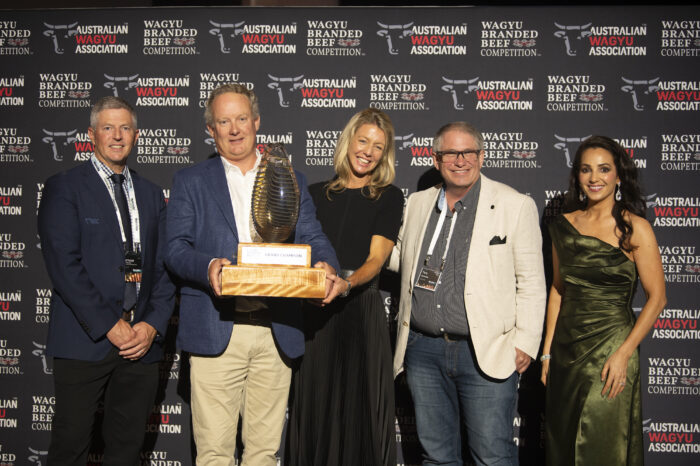
AWA CEO, Dr Matt McDonagh, Martin and Martine Donohue, Marble King Wagyu, Terry Donohue, Ariat Australia and MC Jess Pryles

AWA CEO, Dr Matt McDonagh, Martin and Martine Donohue, Marble King Wagyu, Terry Donohue, Ariat Australia and MC Jess Pryles

2026 WBBC Results Booklet

IMPORTANT NOTICE - Terms & Conditions


It is a condition of use of this database that you accept these terms and conditions. 

It is important that you appreciate when accessing the Australian Wagyu Association Limited (AWA) database (which may be hosted on an external website) that the information contained on the AWA database, including but not limited to pedigree, DNA information, Wagyu Breeding Values (WBVs) and Index values (together called Database Information), is based on data supplied by AWA members and/or third parties. 

Whilst sincere effort is made to ensure the Database Information is accurate and complete, to the extent permitted by law, AWA, its officers and employees, shall not be responsible for its use or interpretation, and you use the Database Information at your own risk. Please be aware of the following limitations of the Database Information.  

Regarding WBVs and Index values, it is important to appreciate, and you need to be aware that: 

  • WBVs are derived using genetic evaluation technology developed for the AWA, using information contained within the AWA database and parameters derived from it.
  • WBVs are estimates of genetic potential of individual animals and may change with addition of new data or with new parameters.
  • WBVs are genetic merit estimates only and may not reflect the raw animal phenotype.
  • WBVs can only be directly compared to other WBVs calculated in the same AWA genetic analysis.

Regarding pedigree and DNA testing results submitted to the AWA, it is important to appreciate, and you need to be aware that: 

  • Animals whose registration identifiers start with PED are Pedigree Recorded Animals. What this means is that the details which AWA used to register the animal were obtained from a Recognised Wagyu Registry Organisation – in other words a Wagyu breed association based outside of Australia. AWA has not independently verified the information with respect to the animal or the details recorded about the animal. You should read AWA’s by-laws which set out details regarding the definition of a Pedigree Recorded Animal. 
  • Pedigree and DNA data submitted and supplied to AWA may have errors in it which cannot be detected without further DNA testing. 
  • Technology may have advanced since a particular test was undertaken so that genetic issues or inaccuracies which were previously not detectable are now able to be detected by current testing technology (i.e. if the animal was tested again with current technology). 
  • AWA estimates that less than 1% of the pedigree entries, ownership or breeding details in the AWA Herdbook may have errors or which may be misleading. For this reason, users ought to consider if they need to obtain independent testing of the relevant animal (if possible) to ensure that the data is accurate. 

Regarding prefectural content, it is important to appreciate, and you need to be aware that: 

  • Prefectural content is based on the estimation of prefectural origin from Japanese breeding records of 201 foundation sires and 168 foundation dams. As genotype-based parent verification is not used in Japan, and full Japanese registration certificates are not available for all foundation animals, exact prefectural composition for these sires and dams cannot be validated. 
  • The calculation of prefectural content for Australian Herdbook animals relies on the accuracy of pedigree records and DNA samples provided by AWA members.   

Regarding DNA testing and genetic condition results submitted to the AWA, it is important to appreciate, and you need to be aware that: 

  • As genetic testing results are provided by independent DNA testing laboratories at the request of AWA members, AWA relies solely on the accuracy of the reporting of genetic testing as completed by the laboratories. 
  • AWA uses GeneProb software to calculate the likelihood of pedigree animals being a carrier of genetic conditions.  This likelihood is an estimate based on the available genetic testing results. 

If you consider that you do not understand or appreciate the nature and/or implications of the data provided on this website or the WBVs of a particular animal, then AWA strongly recommends that you seek expert advice.  Note there is substantial technical information and articles on the Wagyu website to assist our members. 

AWA’s liability for any loss or damage, consequential or otherwise, suffered or incurred by you or your related business, arising directly or indirectly from your use of Database Information, to the extent permitted by law, is limited to AWA providing you with a refund for the fees paid for the service (if any), or AWA re-performing the service, where possible, at the election of AWA.  

AWA administers this database in good faith to support AWA members and the industry. AWA does not represent or warrant that the animals recorded in this database, or animals breed from them, will achieve any particular genetic or phenotype performance.


THIS DISCLAIMER HAS BEEN UPDATED AS OF 03/02/2026, PLEASE ENSURE YOU HAVE READ IT IN DETAIL