
From Innovation to Industry Tool – The Growing role of MIJ in Wagyu
Since entering commercial use in Australia in 2022, the MIJ mobile grading camera has become an increasingly important tool for objective carcase assessment, genetic improvement and premium beef supply chain feedback. With more than 100,000 carcase images annually captured across the Australian Wagyu industry, the technology is delivering value well beyond image collection alone.
Following its introduction into Australian Wagyu supply chains, Meat Image Japan (MIJ) technology has become an increasingly important tool in objective carcase assessment, genetic improvement and premium beef supply chain feedback.
In its mobile form, the MIJ system is now well adopted commercially. Today, it is better understood as an established and expanding technology platform delivering measurable value to Wagyu breeders, processors and brand programs.
For the Australian Wagyu industry, the significance of MIJ lies not simply in image capture, but in the quality of information generated from each carcase. In a sector where marbling performance, consistency and genetic progress directly influence commercial returns, objective and repeatable data has become increasingly important.
An established tool delivering practical value
The MIJ technology has been adapted and refined for Australian conditions, culminating in the release of the MIJ-30 mobile objective grading camera for local use. The mobile system has expanded access to MIJ’s analytical capability by offering a lighter, lower-cost and more portable alternative to the original MIJ-30 unit.
Importantly, the MIJ incorporates a unique configuration, including a stainless steel imaging BEAK. This local adaptation has been central to making the technology practical and robust for use in Australian chillers and grading stations and later international use.
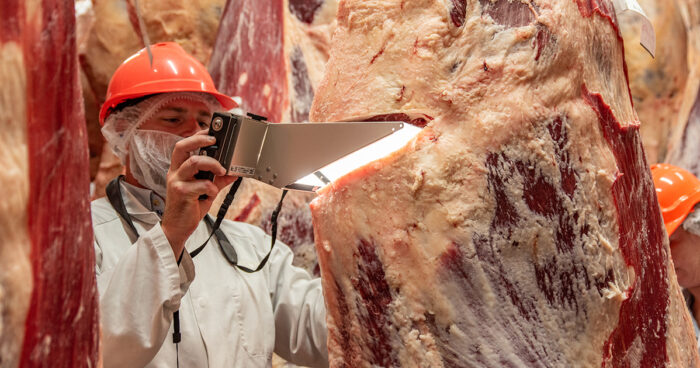
While the mobile device is physically smaller, its role remains the same. The MIJ-30 and MIJ mobile are both input devices designed to capture ribeye images for automated analysis. Considerable development work has gone into refining each unit to ensure reliable image capture under commercial operating conditions.
Same analytical engine, broader accessibility
One of the major strengths of the MIJ platform is that all MIJ devices connect to the same carcase database and use the same cloud-based analysis system. This means the MIJ mobile delivers the same output fields as the established MIJ-30 commercial grading camera.
That consistency is important. It allows different users, sites and supply chains to work from a common analytical platform while benefiting from hardware options suited to their operational requirements. The Australian Wagyu Association has extensively tested the MIJ mobile alongside the MIJ-30, confirming the mobile platform’s ability to produce the same core data outputs used for carcase assessment and genetic analysis.
The analytical capability behind the system draws on more than 30 years of Professor Keigo Kuchida’s research and patented technology. That long-term scientific foundation is one reason MIJ has developed a strong reputation in high-marbling carcase evaluation.
Why MIJ matters in Wagyu
MIJ has become particularly valuable in Wagyu because of its ability to objectively assess carcases with high marbling performance, including both marbling abundance and marbling fineness. This is increasingly relevant as the industry continues to focus on premium eating quality and refined carcase differentiation.
Traditional grading language remains important for trade, but objective imaging provides a deeper layer of information. In high-performing Wagyu programs, some carcases extend well beyond the upper end of conventional marbling descriptors. MIJ helps identify and quantify those outliers more accurately, giving breeders and brand owners a clearer understanding of true performance across a kill group.
That additional precision has important implications. For breeders, it improves the quality of phenotypic data available for selection. For branded beef programs, it supports segmentation of elite carcases into ultra-premium categories. For processors and supply chains, it delivers more consistent and objective carcase feedback.
Throughput and usability under commercial conditions
A key reason MIJ has gained traction is that it has been designed to work in real processing environments. Under Australian conditions, the MIJ-30 mobile is capable of imaging more than 200 carcases per hour in the chiller or grading stations. Trials and commercial use have also demonstrated the ability to complete up to 500 carcase assessments in a little over two hours.
This level of throughput is critical. Any technology used on the processing floor must support commercial pace while maintaining data quality.
The MIJ mobile includes several features that improve usability and reliability in-plant:
- Optimised configuration for carcase grading
- Suitability across recognised grading site locations
- Immediate image review and retake capability
- Bluetooth barcode pairing of carcase tags to image IDs
- Automatic upload to the online database where connectivity is available
- Analysis returned within 5 to 10 seconds in real time
- Total device weight of about 1.2kg
These features are not just convenient; they improve confidence in the data. The ability to review an image immediately after capture and retake it where necessary helps maintain image quality. Bluetooth pairing also strengthens traceability by linking images accurately to carcase identities.
Growth in adoption and data capture
The most telling measure of MIJ’s relevance in Australia is the scale at which it is now being used.
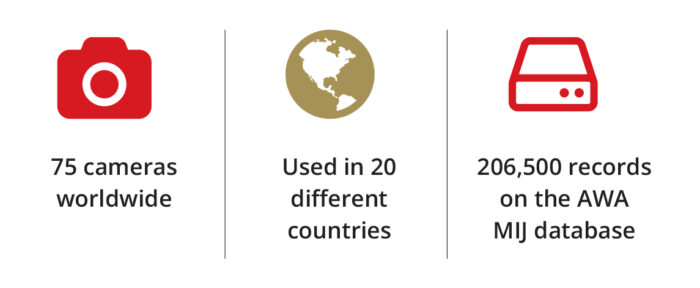
Across the Australian Wagyu industry: 37 MIJ cameras are used within the Australian domestic market and 38 MIJ cameras are used in international Wagyu supply chains:
- more than 206,000 carcase images and associated data records have been captured
- around 26,000 Fullblood carcases have already been incorporated into the AWA genetic evaluation system since MIJ adoption began
These numbers demonstrate that MIJ isis a rubust and meaningful data collection tool contributing to industry-wide evaluation and decision-making.
The growing volume of scanned carcases is particularly important because large, standardised datasets are what turn useful technology into a strategic industry asset. Each image captured contributes to a better understanding of carcase performance, genetic merit and commercial consistency.
Supporting faster genetic progress
One of the clearest benefits of MIJ has been its contribution to genetic improvement in Australian Wagyu.
Much of the data generated through the platform feeds into the Australian Wagyu Association’s genetic analysis, while some supply chains also use the data for internal evaluation. Objective measurement of traits such as marbling abundance, marbling fineness and eye muscle area has improved the strength of carcase information available for WBVs and related genetic tools.
Industry reporting indicates that since MIJ technology began contributing to Australian Wagyu analysis, the estimated heritability for marbling traits has lifted from about 0.3 to around 0.6. That is a substantial shift, because it means a much larger share of the observed variation is being explained by genetics rather than noise or measurement inconsistency.
At the same time, average AUSMEAT performance in Fullblood Wagyu has increased from around 7.3 to Marble Score 8 over the past five years. Just as importantly, MIJ has enabled better identification of elite outliers at the upper end of the marbling spectrum, animals that may otherwise have been grouped together under broader scoring systems.
For breeders, that means stronger selection decisions. For the breed, it means faster and more targeted genetic gain. And for branded beef programs, it supports improved consistency in the supply of high-performing ultra-premium Wagyu.
Benefits beyond breeding
Although MIJ’s strongest immediate value in Australia has been in carcase feedback and genetic improvement, the technology also has broader relevance for the beef industry.
The system provides detailed ribeye image analysis and supports reporting on standard carcase traits. Its usefulness is also expanding beyond Fullblood and F1 Wagyu into other premium marbled beef categories, particularly long-fed and mid-fed Angus programs.
Real time grading functionality can further improve the value of the system in commercial processing by enabling faster sortation decisions before boning, especially in branded programs handling large slaughter groups.
A technology update with industry-wide significance
The MIJ mobile camera should now be viewed as part of the Global Wagyu industry’s objective measurement infrastructure. Since entering commercial use in 2022, it has moved from new technology to proven application
, with expanding deployment, a growing national dataset and increasing relevance to both breeding and processing decisions.
Its value lies in the combination of portability, affordability, speed, standardised outputs and scientifically validated analysis. For Wagyu breeders, it provides stronger data for genetic progress. For processors and supply chains, it offers practical, repeatable and commercially relevant carcase feedback. And for the broader beef sector, it points to a future where objective imaging plays a larger role in quality differentiation and value capture.
As adoption continues and the number of scanned carcases grows, MIJ is helping the industry do something increasingly important: measure premium beef performance more precisely, and use that information more effectively.