
Five years of building the future of Wagyu
At the halfway point of the Australian Wagyu Association’s ten-year Progeny Test Program (PTP), the initiative is beginning to deliver measurable outcomes for the breed, its members, and the broader Wagyu industry.
Over the past five years, the focus has been on establishing a large, well-linked dataset spanning sires, females, herds, and production environments. With strong on‑the‑ground progress in earlier cohorts, the program is now moving beyond data collection and is demonstrating clear commercial value through improved genetic evaluation, increased trait accuracies, and stronger industry-wide linkage.
The strength of the PTP lies in its ability to evaluate genetics across diverse commercial environments and management systems. This enables the Australian Wagyu Association (AWA) to generate more robust, industry-relevant genetic insights for producers.
Once all data is collected from Cohort 1 through to Cohort 6 (calves born 2027), the PTP will comprise more than 140 sires, approximately 9,400 AI joinings, and 7,835 progeny. All progeny are genotyped and comprehensively performance-recorded from birth to slaughter (steers) or first calving (heifers), with data integrated into the AWA database and incorporated into WBV evaluations as soon as possible.
Building a Connected Industry Dataset
A major strength of the PTP is the scale achieved in its first five years. More than 140 sires have been represented across 13 contributor herds operating under varied environmental and management conditions, with over 2,000 females nominated in the most recent cohort.
This level of linkage is critical for improving genetic accuracy and ensuring the results reflect the broader Wagyu industry rather than individual herds.
While sires remain key drivers of genetic progress, the contribution of females and participating herds is equally important. Consistent, high-quality data collected across diverse systems underpins the reliability and long-term value of the program.
Cohort 1: A Major Program Milestone
A significant milestone for the PTP has been the completion of Cohort 1 carcase data collection. This marks the first time the initiative has followed a large cohort of animals throughout the full production cycle, from joining and birth through to growth, feedlot outcomes, and carcase results.
The PTP is now generating measurable commercial insights, showing how genetics perform throughout the production system and providing producers with greater confidence in understanding how genetics influence growth, efficiency, carcase outcomes, and long-term profitability.
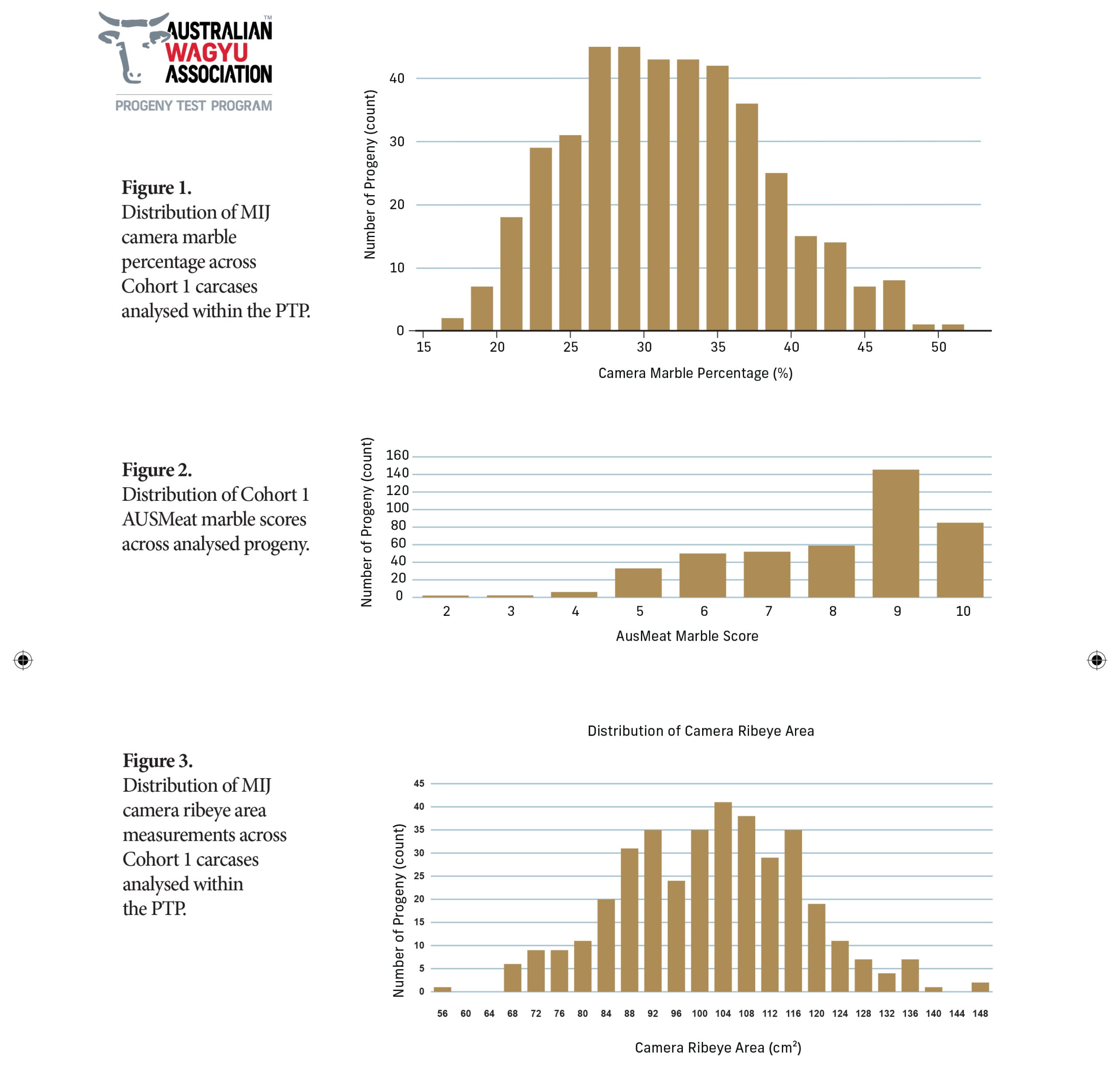
The phenotype distribution graphs below describe how key carcase characteristics are expressed within Cohort 1 progeny, including MIJ camera marbling percentage, AUS-Meat marble score, MIJ camera ribeye area, and AUS-Meat eye muscle area. Overall, the results display the expected bell-shaped spread rather than tight clustering, indicating that a useful range of outcomes has been captured within the cohort.
For marbling, camera marbling percentage spans approximately 18% to over 50%, with most progeny concentrated between 25% and 40%, peaking in the low-30% range. Similarly, AUS-MEAT marbling scores range from approximately 3 to 10, with the highest frequency of animals occurring in the 8–9 score range, reflecting strong marbling while still maintaining clear separation within the cohort.
MIJ camera ribeye area measurements extend from approximately 70 cm² to 145 cm², with most animals grouped between 90 and 115 cm² and a peak around 100–105 cm². AUS-Meat eye muscle area follows a similar pattern, ranging from approximately 70 cm² to 125 cm², with the majority clustered between ~80 and 100 cm². In both cases, the presence of tails at the lower and upper ends highlights meaningful variation in carcase muscling within the population.
These distributions are important because they confirm that the PTP is capturing genuine phenotypic variation in key commercial characteristics. The combination of a strong central cluster and a clear spread toward higher and lower performing animals enables effective separation between progeny, reflecting underlying differences in sire merit.
Capturing this level of variation is critical for effective genetic evaluation, as it provides the contrast needed to underpin predictions and strengthen selection decisions. The ability to consistently identify individuals at the upper end of these distributions supports ongoing gains in carcase quality, yield, and overall production efficiency.
Improving “on-farm” Traits
Improving genetic evaluation of commercially relevant ‘on-farm’ traits is a key area where the PTP is beginning to deliver value. These traits, such as calving ease, female reproduction, efficiency, and growth outcomes, are often not considered as strongly as the carcase relevant traits, like marbling score.
Over the first five years of the program, substantial increases in WBV accuracies have been achieved across contributor herds. One of the most notable improvements has been in gestation length, where the PTP has delivered meaningful gains, with contributor herds WBV accuracy improvements of up to 23% (Table 1).
These gains are important, as shorter gestation lengths can contribute to earlier calving, improved calving ease, increased calf age at weaning, and tighter calving intervals.
Importantly, gestation length also aligns closely with broader selection objectives such as the Breeder Feeder Index (BFI), where fertility, maternal function, and production efficiency collectively contribute to long-term profitability.
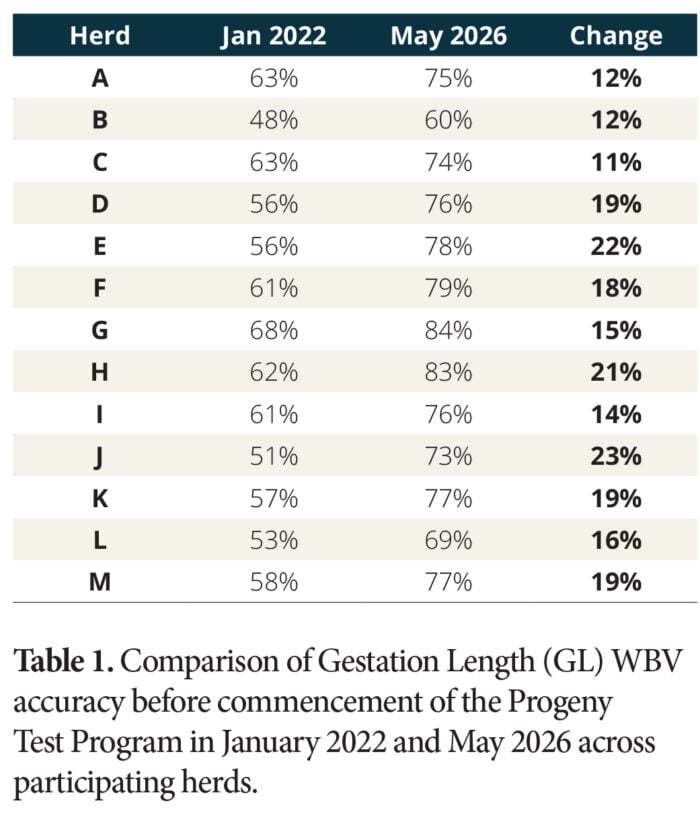
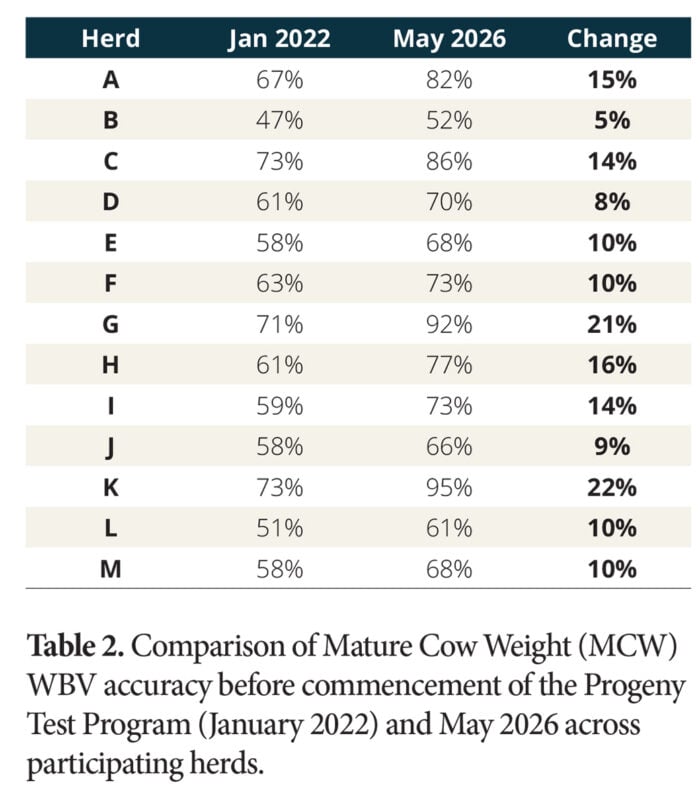
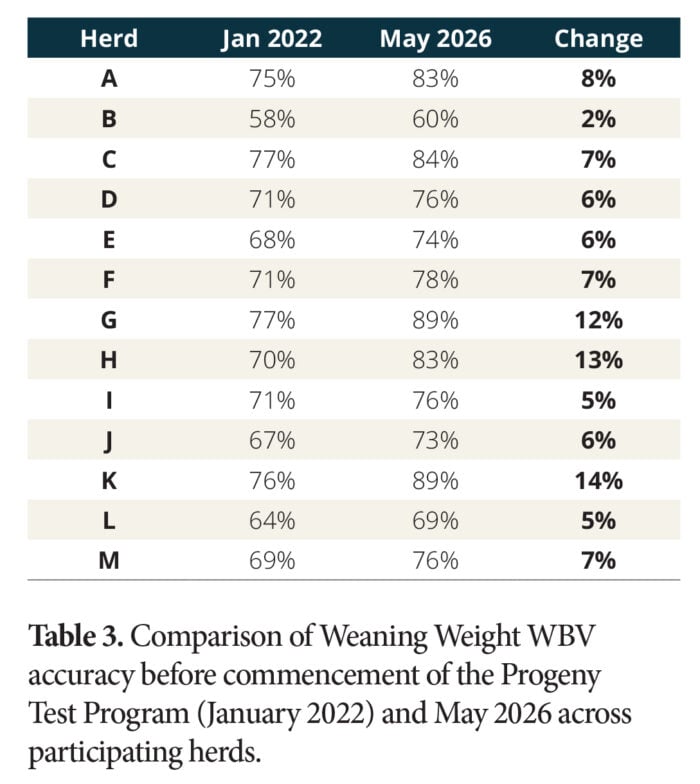
The improvements observed in trait accuracies highlight the growing strength of the PTP reference population and the value of collecting large-scale female performance records from diverse environments.
For self-replacing herds, economically important characteristics associated with maternal function underpin overall herd productivity. Increasing the WBV accuracy of these measures enables more reliable identification of females and progeny with the ability to conceive efficiently, calve unassisted, rear offspring effectively, and maintain productivity over multiple joining cycles, ultimately supporting long-term profitability.
Greater accuracy in on‑farm WBVs provides producers with increased confidence when making breeding decisions and selecting animals suited to their production systems.
Strengthening Sire Comparisons Through Real Data
Sires used within the PTP are selected based on a combination of genomic diversity, BFI performance, and specific WBV profiles. Their value is most effectively demonstrated through the outcomes of their progeny when assessed within well-managed contemporary groups that span multiple herds, environments, and management systems. Table 4 provides an overview of Cohort 1 male progeny, comprising 421 carcasses sired by 38 sires.
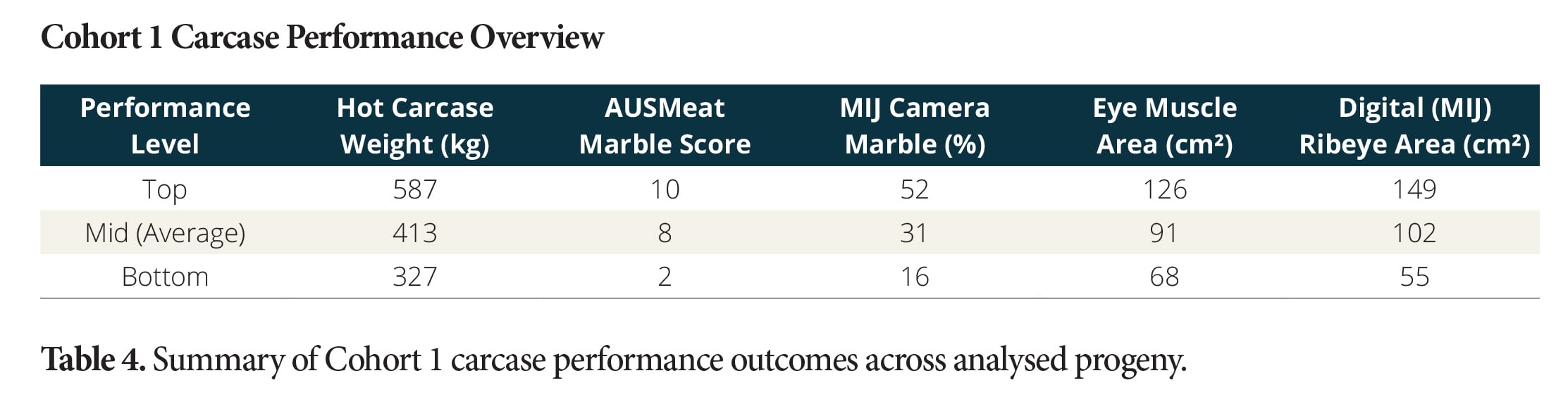
The structure of the PTP enables sires to be linked between contemporary groups and production systems, allowing for stronger and more industry-relevant comparisons than would typically be achieved within single-herd datasets.
The objective of the PTP is not to identify a single best sire, but to better understand how different genetic profiles perform across production systems and breeding objectives, using progeny outcomes to inform more accurate sire comparisons.
Net Feed Intake:
Improving Production Efficiency
Net Feed Intake (NFI) is emerging as one of the most important traits for the future of Wagyu production.
With feed representing one of the largest input costs within Wagyu systems, the ability to identify more efficient animals presents a major opportunity to improve profitability.
The PTP has been incredibly effective in proving up hard to collect traits such as NFI while still being able to effectively and evaluate other key production traits across progeny, supporting more informed and balanced selection decisions.
Figure 4 illustrates the relationship between NFI and BFI for progeny evaluated within the PTP. Each point represents an individual observation plotted by NFI against BFI.
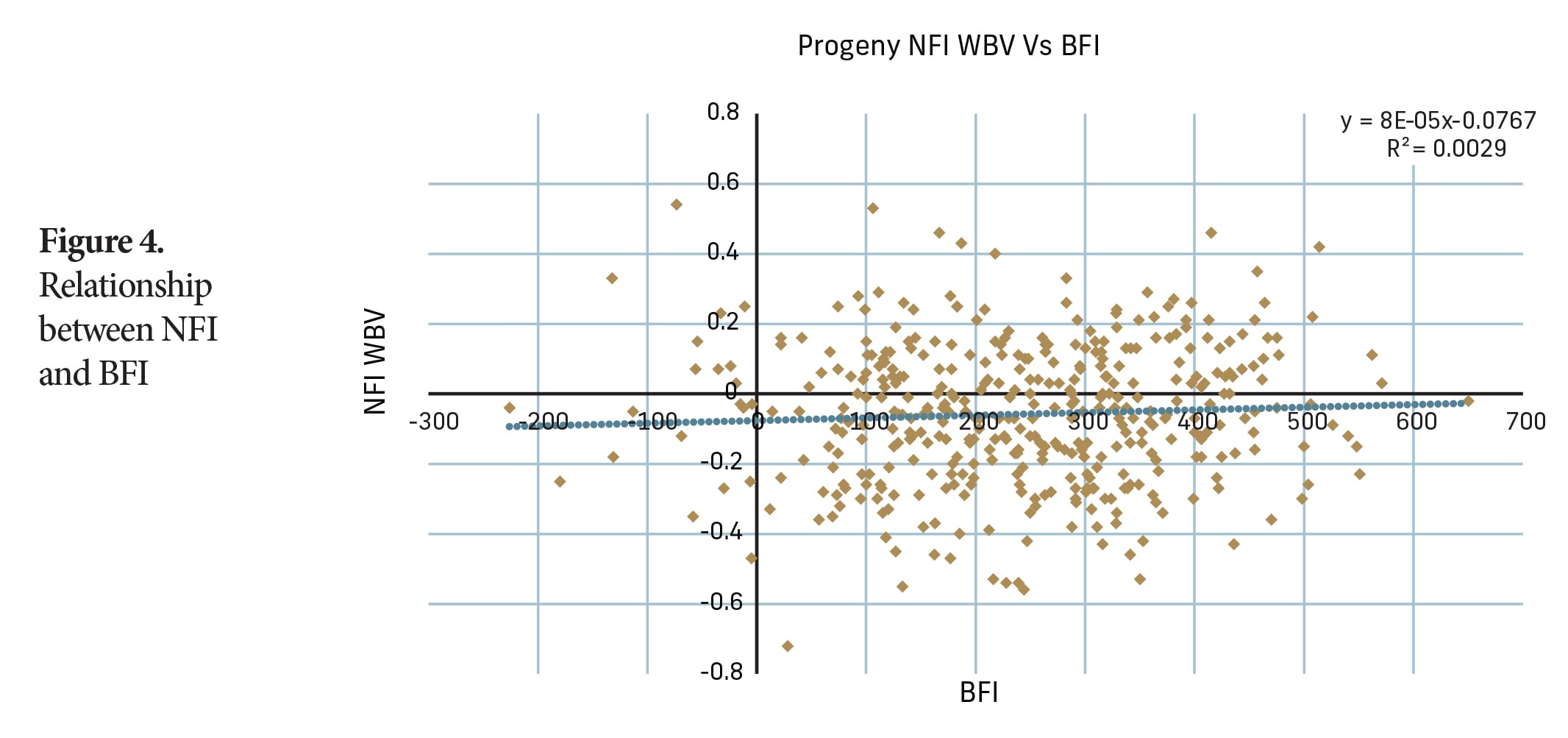
The distribution shows no meaningful relationship between the two measures (R² ≈ 0.003), indicating that variation in feed efficiency is largely independent of overall production outcomes within this dataset.
This result is important, as it suggests that improvements in feed efficiency can be achieved without negatively influencing the production components captured within BFI. As a result, both can be considered independently within selection frameworks, supporting balanced genetic progress across efficiency and production outcomes.
Figure 5 further examines the relationship between NFI and marble score. It is often assumed that animals with higher marbling require greater feed intake and therefore display poorer efficiency (higher NFI). However, the distribution provides no evidence to support this assumption in the Wagyu population.
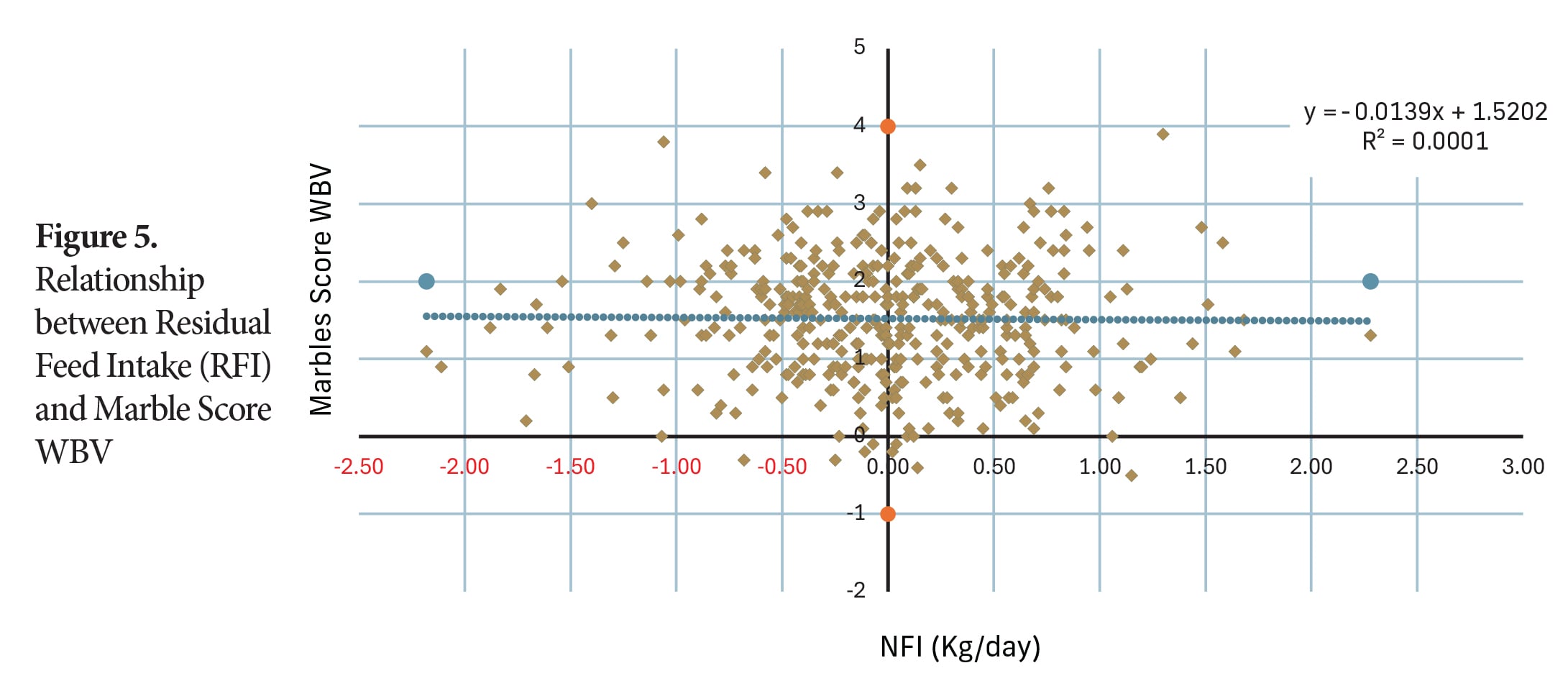
Marble scores are observed throughout the full range of NFI values, including animals with favourable (lower) intake. The highlighted extreme observations demonstrate that individuals with similar feed intake can still exhibit substantial variation in marbling.
The near-zero correlation between NFI and marble score (R² ≈ 0.0001) confirms that feed efficiency is largely independent of marbling within this dataset.
Interpretation and Implications for Selection
Together, these results demonstrate that feed efficiency is not constrained by either overall production performance or carcase quality traits within this dataset. Rather than identifying a single optimal region for selection, the distributions highlight the importance of evaluating animals across multiple traits simultaneously.
These findings reinforce the value of multi-trait selection approaches, enabling concurrent genetic improvement in feed efficiency, production performance, and carcase quality. This provides confidence that more efficient production systems can be achieved without compromising eating quality outcomes.
Defining Wagyu Through Fatty Acid Data
One of the most distinctive and forward-looking aspects of the PTP is the inclusion of fatty acid profiling.
To date, more than 400 samples have been analysed through laboratory testing, providing valuable insight into fat composition, including oleic acid content and broader fat quality measures.
This work extends beyond traditional carcase measurements such as marbling score, further defining the composition of Wagyu fat itself, a key contributor to eating quality, consumer experience, and premium market differentiation.
Importantly, each sample contributes to a growing reference population that will underpin the development and refinement of future breed genomic tools and prediction capabilities. Peer-reviewed research shows that favourable fatty acid profiles, particularly monounsaturated fatty acids (MUFA), can be selected for, with strong links to improved fat composition and eating quality. Heritability estimates for MUFA in Wagyu are as high as 0.68, with a low but positive correlation (0.231) with marbling score, indicating that higher MUFA levels can be achieved without negatively affecting marbling expression.
Figure 6 illustrates the range of oleic acid (the primary MUFA) observed across sires used in Cohort 1 of the PTP. While some overlap exists, clear differences among sires indicate variation in their tendency to produce progeny with higher oleic acid levels.
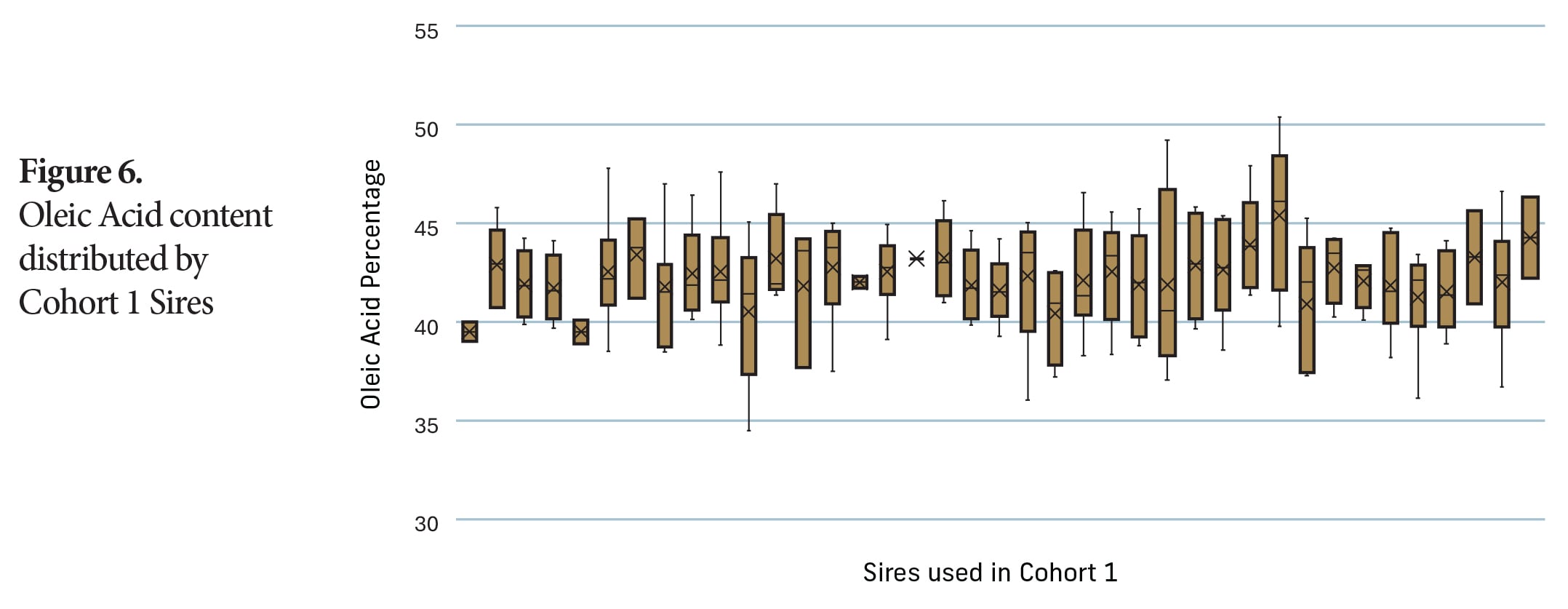
As the dataset expands, the industry will gain a stronger understanding of the genetic relationships underpinning:
Oleic acid composition, contributing to improved fatty acid profiles and potential human health benefits
Fat quality, supporting both nutritional value and product consistency
Eating quality attributes, including tenderness, juiciness, and flavour
Consumer-driven product outcomes, enhancing appeal, differentiation, and access to premium markets
This positions the Wagyu breed strongly within domestic and international premium markets, where eating quality, consistency, and product differentiation continue to drive demand.
Take-Home Message
The success of the Progeny Test Program is built on the contribution, commitment, and collaboration of its members.
Contributor herds; particularly their female base, play a fundamental role in underpinning the strength and long-term impact of the initiative. The information being generated, the insights developed, and the genetic gains achieved across the breed are all a direct result of the ongoing involvement of participating producers.
The value of the PTP continues to grow with each cohort, every performance record, and each contribution returned to the system.
The willingness of members to participate in structured data collection within diverse environments and production systems enables the program to deliver meaningful, industry-relevant outcomes for the broader Wagyu sector.
Ultimately, the PTP is a collaborative effort, with its greatest strength lying in the partnership between the Australian Wagyu Association and its contributor herds, working together to strengthen the breed into the future.
References:
1) Nogi, T., Honda, T., Mukai, F., Okagaki, T., & Oyama, K. (2011). Heritabilities and genetic correlations of fatty acid compositions in longissimus muscle lipid with carcass traits in Japanese Black cattle. Journal of Animal Science, 89(3), 615-621.