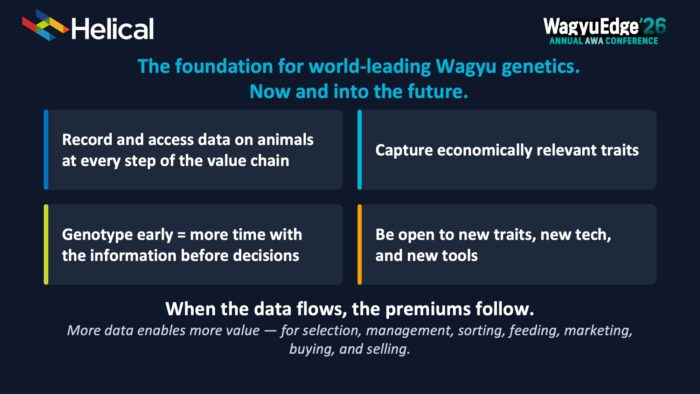
As genomic technologies, artificial intelligence and automated data collection continue to reshape livestock breeding, the ability to effectively capture, manage and utilise data is becoming increasingly important.
That was the key message from Dan Garrick of Helical, who presented at WagyuEdge’26 in Brisbane, outlining how modern data systems are helping unlock the next generation of genetic improvement and decision making tools for the Wagyu industry.
A long-time collaborator with the Australian Wagyu Association, Dan reflected on a partnership that began in 2017 with a request for parent verification and pedigree discovery tools, and has since evolved into the development of a comprehensive digital platform supporting genetics, registrations, genomic data and performance recording.
The Power of the Genetic Improvement Flywheel
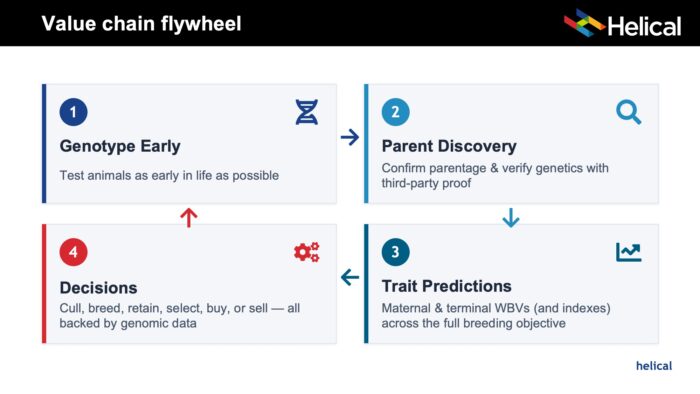
At the heart of Dan’s presentation was what he described as the “value chain flywheel” of genetic improvement.
The process begins with genotyping animals as early as possible, enabling breeders to access valuable information throughout an animal’s life. Combined with parentage verification, genomic predictions and performance data, this information supports more informed breeding and management decisions.
However, Dan stressed that the success of this system depends on one critical component: quality data.
“The measurements and phenotype data flowing into the system are what keep the flywheel turning,” he explained.
While genetic technologies continue to advance rapidly, data fragmentation has often limited the industry’s ability to fully capitalise on those gains. Multiple databases, disconnected systems and inconsistent data management can create bottlenecks that slow progress and reduce the value of collected information.
Creating a Unified Data Ecosystem
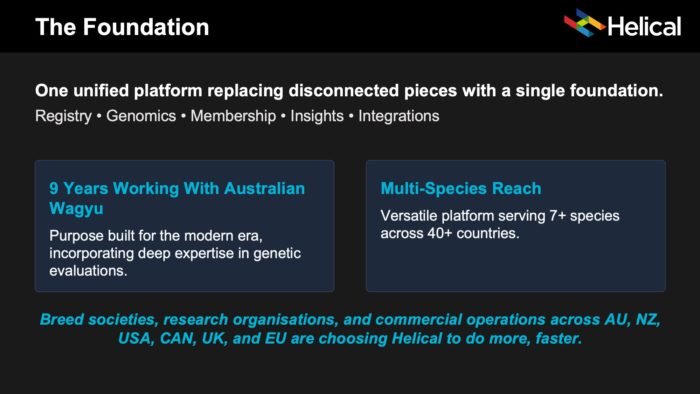
To address these challenges, Helical has developed a single platform designed to integrate registration records, genomic information, memberships, phenotype data and breeding tools into one connected system.
The Australian Wagyu Association led the charge in development and, multiple breed societies have followed suit and have adopted the platform as part of a broader effort to modernise data management and improve accessibility for members.
According to Dan, the objective is simple: eliminate the inefficiencies created when data is scattered across spreadsheets, laboratories, notebooks and disconnected software systems.
“We saw a significant opportunity to bring all of that information together and make it easier for producers to use,” he said.
The platform is now used across multiple livestock species and in more than 40 countries, reflecting the growing demand for integrated genetic and performance recording systems.
Faster Data, Faster Decisions
One of the major benefits of improved data integration is the ability to deliver more frequent genetic evaluations.
Dan highlighted the move to weekly evaluations for the AWA, allowing breeders to receive updated breeding values far more quickly than traditional monthly reporting cycles.
Rather than waiting weeks for results, new genomic and performance information can be incorporated almost immediately, ensuring producers are making decisions using the most current data available.
“It means every time you look at Wagyu Breeding Values (WBVs), you have the latest and most up-to-date information,” Garrick said.
This capability becomes increasingly important as genomic testing becomes more widespread and producers seek to accelerate genetic gain through faster selection decisions.
Unlocking the Next Generation of Traits
Beyond traditional performance recording, Dan described a future where entirely new sources of data become available through emerging technologies.
Wearable monitoring devices, electronic identification systems, remote sensors, weather stations and automated imaging technologies are already beginning to generate vast amounts of information about individual animals and production systems.
The challenge is no longer collecting data. The challenge is creating systems capable of organising, analysing and translating that information into practical tools for producers.
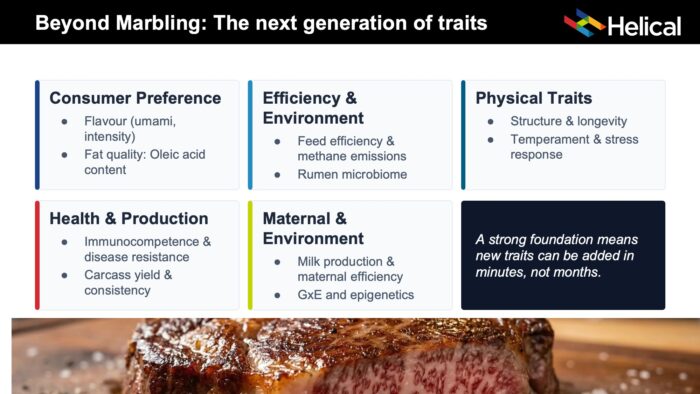
These technologies could potentially support the development of new WBVs relating to efficiency, sustainability, grazing behaviour, structure, temperament and a range of other traits not previously available to breeders.
“There are opportunities for new traits and new WBVs that simply weren’t possible before,” Garrick said.
Artificial Intelligence as a Decision-Making Tool
Another major focus of the presentation was the role artificial intelligence will play in helping producers navigate increasingly complex datasets.
As animal records continue to grow and breeding programs become more sophisticated, Dan believes AI will become an important decision-support tool for breeders.
Rather than replacing producers’ expertise, AI can help identify patterns, prioritise information and make it easier to act on the growing volume of data available within modern breeding programs
“We spend so much effort producing WBVs and genetic predictions,” he said. “The next step is helping people get the maximum value from that information.”
The Importance of Whole Herd Recording
Dan also reinforced the importance of comprehensive data collection.
For traits such as fertility, collecting information on every animal in a herd, not just top performers, is critical to producing accurate predictions and meaningful breeding values.
Similarly, greater integration of commercial performance data can strengthen evaluation systems by increasing the volume and diversity of information available to genetic analyses.
Tools such as the AWA’s Wagyu Feeder Check program demonstrate how commercial data can be fed back into genetic programs, improving the accuracy of future predictions while delivering practical value across the supply chain.
Preparing for the Data Tsunami
Looking ahead, Dan predicted the industry is only at the beginning of a major wave of technological innovation.
From rumen microbiome analysis and automated structural assessment to epigenetics, environmental measurements and advanced monitoring systems, the volume of available data is set to increase dramatically.
His message to breeders was to remain open to new technologies while continuing to focus on collecting quality data that drives meaningful outcomes.
“There’s a tsunami of new technology coming,” he told delegates. “We’ll provide as many tools as we can, but ultimately producers will decide how and when to use them.”
For the Australian Wagyu industry, Dan believes the foundations are now being built to support world-leading genetic improvement for decades to come.
“When the data flows, the premiums can follow,” he said. “More data creates more opportunities, not only for breeding decisions, but also for management, marketing and ultimately delivering greater value across the entire Wagyu supply chain.”