
Feed efficiency remains one of the most powerful levers for improving profitability in Wagyu production. In long-fed systems, where cattle regularly spend 300 days or more on feed, feed costs represent the single largest variable expense. Even small improvements in efficiency can deliver substantial economic gains across the supply chain.
Recognising this, the Australian Wagyu Association (AWA) has introduced the Net Feed Intake (NFI) Wagyu Breeding Value (WBV), a purpose-built genetic tool that enables breeders to directly select for feed efficiency without compromising growth, carcase quality or overall performance.
Understanding Net Feed Intake
Net Feed Intake (NFI) is a scientifically robust measure of feed efficiency. It captures the difference between an animal’s actual feed intake and its expected intake based on its body weight and growth rate.
Put simply, NFI answers a critical question:
How much more or less does an animal eat than we would expect for its level of production?
- Negative (lower) NFI values: animals consume less feed than expected and are therefore more efficient
- Positive (higher) NFI values: animals consume more feed than expected and are less efficient
A defining strength of NFI is its independence from growth and mature size. This means animals can be compared fairly on efficiency without the results being distorted by differences in weight gain or body size. This distinguishes NFI from traditional metrics such as Feed Conversion Ratio (FCR), which are heavily influenced by growth rate and can inadvertently favour larger, higher-maintenance animals.
Why Feed Efficiency Matters in Wagyu Systems
The Wagyu industry presents a unique production context where feed efficiency is particularly critical.
Long-fed programs amplify inefficiencies. Over extended feeding periods, even minor differences in daily feed intake accumulate into significant cost variations. An animal that consumes slightly more feed than expected each day may ultimately cost hundreds of dollars more to finish.
Historically, improvements in feed efficiency have often been achieved indirectly—primarily through selection for growth or increased carcase weight. While effective to a degree, this strategy has clear limitations in Wagyu systems:
- Selection for growth can increase mature size and ongoing maintenance requirements.
- Animals with similar growth performance can still differ markedly in feed intake
- Efficiency improvements are inconsistent and difficult to isolate
The introduction of the NFI WBV addresses these challenges by allowing breeders to target efficiency directly. Instead of relying on correlated traits, producers can now identify genetics that inherently require less feed for the same level of output.
The NFI WBV: A Next-Generation Genetic Tool
The NFI WBV (figure 1) forms part of the AWA’s next-generation genetic evaluation framework, developed specifically for Wagyu. It leverages large-scale datasets, including phenotypic records, pedigree information and genomic data, to deliver robust and reliable predictions.
By incorporating this depth of data, the NFI WBV provides a powerful breeding tool that supports breeding calves for:
- Reduced feed costs per animal
- Improved resource utilisation
- Enhanced environmental sustainability
- Greater consistency in feeding performance
In an industry where margins are closely tied to feed efficiency, the ability to make targeted genetic improvements represents a major step forward.
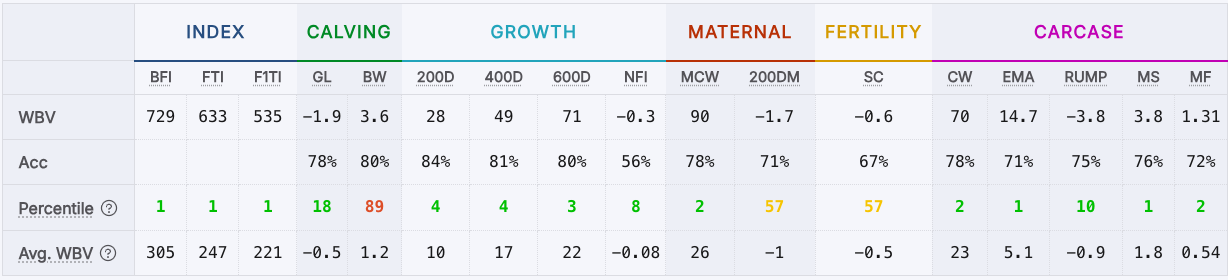
Figure 1 – Example WBVs, including the NFI WBV, for an individual animal on the helical platform.
NFI Recording Trend
Recent recording trends within the AWA highlight that the NFI WBV is now underpinned by a substantial and increasingly contemporary dataset.
Since 2016, more than 2,500 animals have been recorded for individual feed intake, with a marked expansion in recent years. Annual records rising from relatively modest levels earlier in the decade to over 300 animals in 2023 and exceeding 400 animals in both 2024 and 2025 (figure 2).
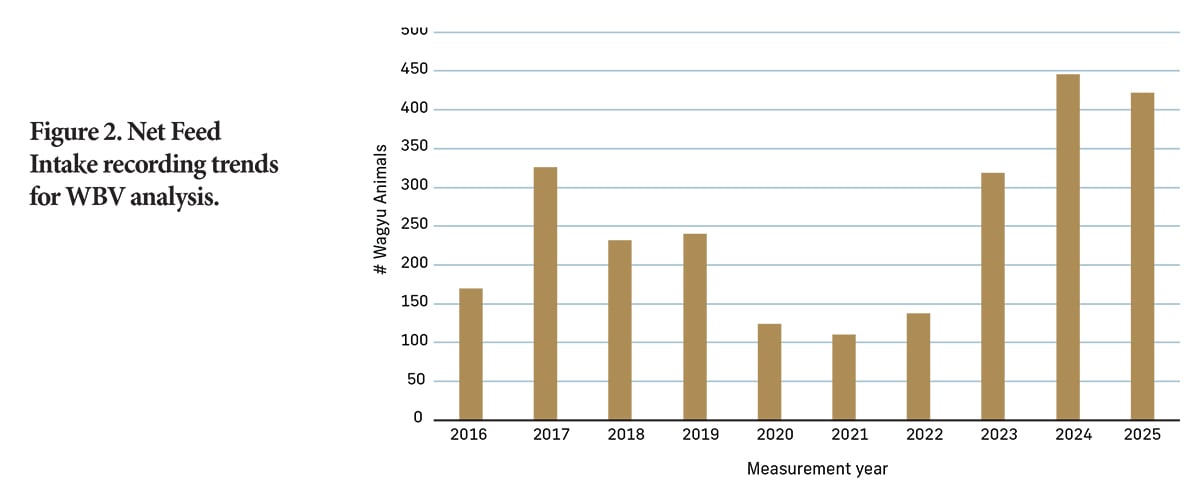
Figure 2. Net Feed Intake recording trends for WBV analysis.
The recent increase in available NFI records results from both member initiatives and the AWA’s renown Progeny Test Program or PTP .
This strong growth in participation ensures that the NFI evaluation is not only built on a sound genetic evaluation framework, but also on current, industry-relevant data, enhancing the accuracy, stability and practical value of the WBV for modern Wagyu production systems.
For further information on recording feed intake data for the NFI WBV analysis, please refer to the AWA Knowledge Centre.
Interpreting the NFI WBV
For breeders and commercial producers, understanding how to interpret the NFI WBV is key to its effective use.
The WBV is expressed in kilograms of feed intake per day (kg/day) and represents the expected genetic difference between animals under comparable production conditions.
Key principles:
- Lower (more negative) values are more favourable
- Values represent relative genetic differences—not absolute intake
- Differences are expressed through progeny performance
Example
Consider two sires:
Sire A: NFI WBV of –0.5 kg/day
Sire B: NFI WBV of +0.3 kg/day
The difference between the two sires is 0.8 kg/day. When expressed in their progeny (which inherit half their genetics from each sire), this equates to a 0.4 kg/day reduction in feed intake for progeny of Sire A compared to Sire B, assuming similar growth and weight.
Over a long feeding period, this difference becomes highly significant in cost terms.
Integrating NFI into Breeding Decisions
While the NFI WBV is a powerful tool, it is most effective when used as part of a balanced breeding strategy.
Key considerations include:
- Avoid single-trait selection: Feed efficiency should be considered alongside growth, carcase traits, fertility and overall structural soundness.
- Align selection with production goals: The relative importance of NFI will vary between seedstock, backgrounding and feedlot-focused operations.
- Focus on differences between animals: The value of the WBV lies in comparing animals within a breeding decision rather than interpreting the absolute figure in isolation.
It is also important to note that NFI is not currently included in AWA selection indexes, meaning breeders must incorporate it consciously into their selection frameworks.
Driving Profitability and Sustainability
The implications of improved feed efficiency extend beyond direct cost savings.
- Economic benefit: Reduced feed intake lowers input costs and improves margins
- Environmental impact: More efficient cattle produce less methane and utilise resources more effectively
- Industry competitiveness: Enhancing efficiency strengthens the global position of Australian Wagyu
In a market increasingly focused on sustainability and production efficiency, the ability to genetically improve feed utilisation represents a critical advantage.
Looking Ahead
The introduction of the NFI WBV marks a significant milestone for Wagyu genetic evaluation. By enabling direct selection for feed efficiency, it equips breeders with a practical, data-driven tool to address one of the industry’s most important cost drivers.
As adoption increases and datasets continue to expand, the impact of NFI selection will compound across generations, delivering long-term gains in profitability, productivity and sustainability.
For Wagyu producers committed to continuous improvement, the message is clear: feed efficiency is no longer an indirect outcome, it is a trait that can be measured, selected and improved.