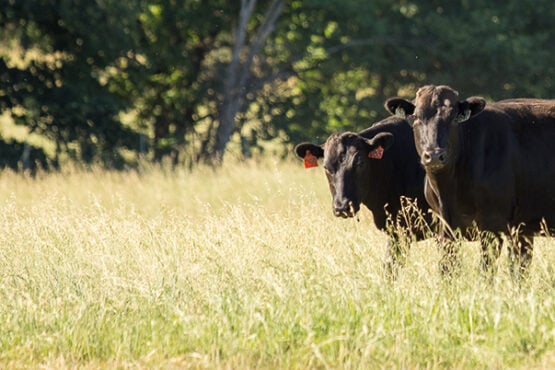
Feed efficiency is particularly important in Wagyu production systems, where cattle are often fed for extended periods and feed costs represent a significant proportion of total production expenses. Net Feed Intake (NFI) is a measure of feed efficiency that compares an animal’s actual feed intake with the amount of feed it is expected to consume based on its size and growth rate. Animals with lower NFI values consume less feed than expected while maintaining comparable levels of performance, making NFI an important trait for identifying more efficient genetics in both seedstock and commercial Wagyu herds. Because NFI is largely independent of growth, mature size and carcase characteristics, breeders can select for improved feed efficiency while maintaining progress in other economically important traits.
Recording Net Feed Intake
Data collection for NFI can be recorded either ‘On Farm’ or through a ‘Central Test Facility’. To collect NFI data you need to record:
- Daily feed intake measurements
- Regular weights to assess the weight and the rate of weight gain of the individuals being assessed.
Using a commercial feeding system that records feed intake automatically by utilising electronic identification methods for individual animals is highly recommended.
NFI information needs to be measured in a standardised way which can prove challenging, expensive and time consuming. It is important to note that bulls, steers and heifers can be tested however animals must be grouped in same sex pens for NFI testing.
Animal Preparation for NFI testing
- Animal Health– it is recommended that animals are vaccinated prior to entering NFI testing to reduce impacts of illness on the data set and ensure all animals have equal opportunity for growth and feed intake performance. A comprehensive health treatment plan may include 5 in 1 vaccination, drenching for parasites internally and externally and a bovine respiratory vaccination such as Bovilis MH + IBR vaccine.
- AnimalIdentification – electronic identification system (such as NLIS tags) must be cross referenced with the Australian Wagyu Association ID needs to be specified when submitting your NFI data to the Australian Wagyu Association (AWA). The electronic system needs to be compatible with the feeding system designed to record individual animal feed intake.
- Adjustment Period– Allow for adequate time for animals to adjust to new feed rations and feeding equipment. 21 days is a good minimum for cattle that have not been previously on a concentrated ration diet. It is important to monitor animals during this adjustment period on their feed intake and acceptance of the new diet. If you notice any shy feeder animals within the group, it is recommended to remove them during the adjustment period before the trial begins as they may compromise your data set.
Feed Intake Measurements
- Need to be recorded every day for each individual animal in kilograms of feed consumed.
- A trial period of 70 days, with at least 60 valid feed intake (days) records collected for each animal is recommended. This can be shortened to 50 valid feed intake days if in-pen live weight scales are being used, rather than periodic yard weighing.
- Feed animals ad libitum during the trial period on a constant ration.
- Regularly monitor and review daily intake measurements for individual animals and if you notice sick or injured animals, they may need to be removed from the trial as they would not have equal opportunity to perform if their body is fighting infections.
- Check equipment (feeding units, scales or electronic identification systems) are working properly throughout the trial period so any faults can be repaired to avoid loss of data and the trial is invalidated.
Collecting Animal Weights for NFI Trial
A weight must be collected at the beginning and end of the trial period along with 14-day interval weights during the trial period.
Regular weight recording is imperative during the NFI trial period, as net feed intake is calculated by adjusting daily feed intake measurements against an animal’s live weight and rate of weight gain throughout the duration of the trial.
Considerations when weighing animals include:
- Weigh animals from a pen in one group
- Weigh animals as soon as possible after vacating the pen, do not delay.
- If you need to perform other processes such as ultrasound scanning, it is best practice to weigh the animals first and then run them through the yards a second time to perform the other procedure.
In-pen automatic weighing systems may be used as an alternative to periodic yard weighing, provided the equipment can accurately identify individual animals and collect sufficient valid weight records throughout the trial. Automatic weighing systems can increase the frequency of weight collection, reduce animal handling and associated stress, and improve the accuracy of growth estimates by providing more weight observations.
Collating Net Feed Intake Data
The Australian Wagyu Association requires the following information for submission of NFI data. The AWA also accepts NFI results as supplied by service providers such as Vytelle.
| INFORMATION | DESCRIPTION |
| Trial Start Date* | Date at start of feed intake trial, excluding adjustment period. |
| Trial Test Station* | Code of the Test Station where the NFI trial was conducted. |
| Trial Test ID* | Identifier unique to this specific trial. |
| Recording Member | ID of the member recording the trait, typically the current owner. |
| Trial Management Group | Management group code for the animals in the trial (usually pen number). |
| Feeding Type | Manual (M) or Automatic (A) feeding during the trial. |
| Weigh Method* | Manual (M) or Automatic (A) Weighing during the trial. |
| Ration Energy Density | MJ ME/Kg*10 of ration energy density. |
| Trial End Date* | Date when trial ended. |
| Weight Record Count | Number of weights used when fitting the regression line to calculate start and end trial weights. |
| Trial Start Weight* | Weight at start of trial as calculated from the fitted regression line (Not the actual weight) |
| Trial End Weight* | Weight at end of trial as calculated from the fitted regression line (Not the actual weight) |
| Average Intake (kg*10) * | Average daily feed intake over the duration of the trial. |
| Test Type | Trial Type – post weaning (P), finishing (F). |
| AWA ID* | Full AWA animal ID |
*Required Fields.
Average Daily Feed Intake Calculation
Once the daily feed intake measurements for the trial period has been recorded, the average daily feed intake then needs to be calculated. It is important to consider:
- Only valid daily feed intake measurements are included.
- Invalid feed intake records should be removed
Invalid feed intake
A feed intake may be considered invalid on a particular day for a single animal or a whole pen based on:
- If an animal loses its electronic tag and is unable to be identified.
- If a pen has been out of feed for an extended period of time.
- Faulty equipment.
- Discrepancies between feed deliveries and recorded feed consumption should be investigated, as they may indicate equipment malfunctions, feed wastage, or data recording errors that could affect the accuracy of trial results.
- If a weather event (rain, heat) substantially alters feed intake measurements for the pen.
- Days where animals are removed from the pen for an extended period of time for example, when animals are being ultrasound scanned. It is best practice to weight animals quickly and put back in then pen.
When checking the amount of valid days over the feed trial period and it does not meet the minimum required 60 days for an animal, a pen or across all pens, then the trial period may need to be extended to reach this requirement. Alternatively, the feed intake measurements should be excluded for any individual animal with less than 60 valid measurements
Start and End weights calculation
The start and end weights submitted in the NFI data set are not the actual weights recorded at the time of the trial; they are calculated by fitting a linear regression line across all weights collected for an individual animal during the trial period. Using a regression line across multiple weight records helps account for normal variation between weigh dates and provides a more accurate estimate of an animal’s growth performance during the trial. At least five weights should be used to fit the linear regression line. It is important to analyse the relationship between the different weights from each individual animal and remove any that vary significantly from the regression line.
The fit of the regression should be reviewed to ensure weight records accurately reflect the animal’s growth throughout the test period. Where substantial deviations occur, individual weight records should be investigated and removed if deemed inaccurate.
Important Contemporary Group Information
Test Station
Identify the test station using standard 3-character codes i.e.
| CODE | TEST STATION |
| LLV | Lily Vale Feedlot |
| KER | Kerwee Feedlot |
| ONF | On-Farm |
Management Group
Specifying a management group is essential for grouping together animals with equal opportunity to perform. It is very important to specify management groups in feed trials to separate animals whose daily feed intake may have been impacted by other non-genetic factors such as illness and injuries.
Animals in different pens should be separated into different management groups as pen differences generally have an effect on feed consumption. Different management groups are particularly important for animals in different pens, starting their feed trial on the same date.
Test Type
Specify the testing type with:
Post Weaning (P) – Young animals in the growth stage post weaning.
Finishing (F) – Animals laying down fat in the finishing phase of feedlotting.
While recording the test type during the NFI trial is not currently analysed within the genetic evaluation module, it is an aspect or our research and development for future enhancements.
Helpful Hints
Getting the most out of contemporary groups:
- Allocate animals into pens based on their most recent contemporary group, animals that have been managed under similar conditions prior to the trial.
- Group animals into same sex pens.
- Animals in known single contemporary groups should not go through the trial. For example, sick animals or twin calves.
- Where possible, include progeny from multiple sires within a trial to improve the data’s effectiveness.
- Larger contemporary groups generally improve the robustness of feed intake analyses by increasing the amount of comparative information available within the trial.
- When contemporary groups must be divided across multiple pens, sire progeny should be allocated as evenly as possible to maintain comparable genetic and management representation between pens. This helps minimise potential pen effects and supports more accurate evaluation of feed efficiency.