What is Wagyu Feeder Check
Wagyu Feeder Check (WFC) is a commercial DNA genomic test developed by the Australian Wagyu Association in partnership with CSIRO and delivered through Neogen.
The test is designed for Wagyu-content cattle and provides genomic predictions for key performance and carcase traits, helping producers identify animals with lower genetic merit before they enter expensive long-fed programs. By supporting more informed selection decisions, Wagyu Feeder Check aims to improve production efficiency, profitability, and sustainability across the Australian Wagyu industry.
In addition to genomic predictions, the test also includes sire verification, providing confidence in pedigree records and strengthening genetic evaluation across the supply chain.
Primary Value of Wagyu Feeder Check
Wagyu Feeder Check helps identify animals that are expected to deliver the greatest return from investment in long-fed production programs.
Wagyu feeders can spend more than 300-500 days on feed, representing a significant investment in feed, labour, finance, and feedlot capacity. Not all Wagyu-content animals have the genetic potential to achieve the levels of growth, carcase performance, and marbling required to justify this investment.
By providing genomic predictions before animals enter long-fed programs, Wagyu Feeder Check supports more informed management decisions and helps producers allocate resources to cattle with the greatest potential to meet premium market specifications.
Wagyu Feeder Check Outcomes
Wagyu Feeder Check provides genomic predictions for key traits that support commercial decision-making and genetic improvement.
Performance and Carcase Traits
- Feedlot Average Daily Gain (ADG)
- Carcase Weight
- Fat Depth
- Eye Muscle Area (EMA)
- Marbling
Sire Verification
- Sire verification to confirm parentage and improve confidence in pedigree records.
These predictions can be used alongside production and carcase data to support animal selection decisions, improve herd performance, and contribute to ongoing genetic improvement within the Australian Wagyu industry.
Viewing your Wagyu Feeder Check Results
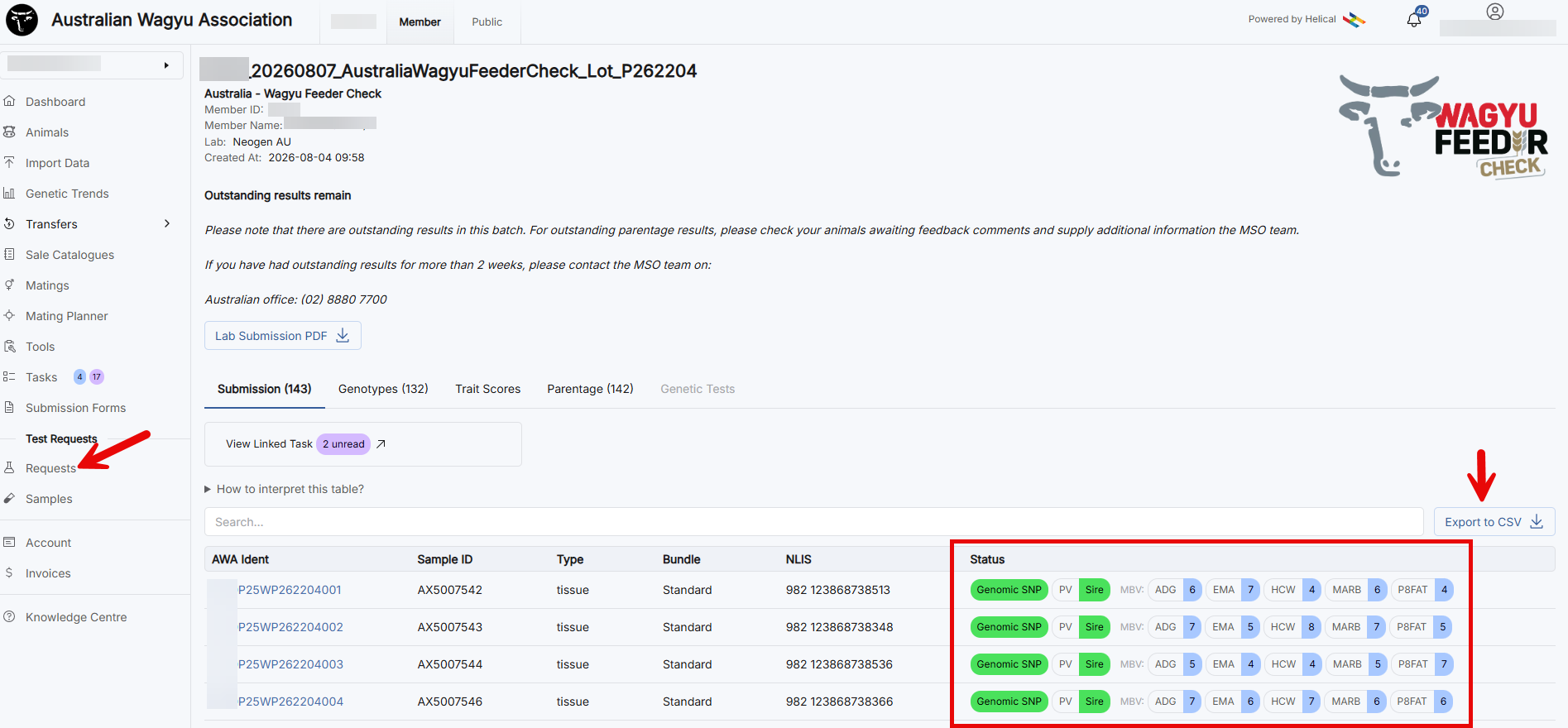
Wagyu Feeder Check results are returned through the Helical platform and provide genomic predictions for each reported trait, along with sire verification results where available.
Results can be viewed directly from the DNA test request, allowing you to review outcomes for all animals included in the submission.
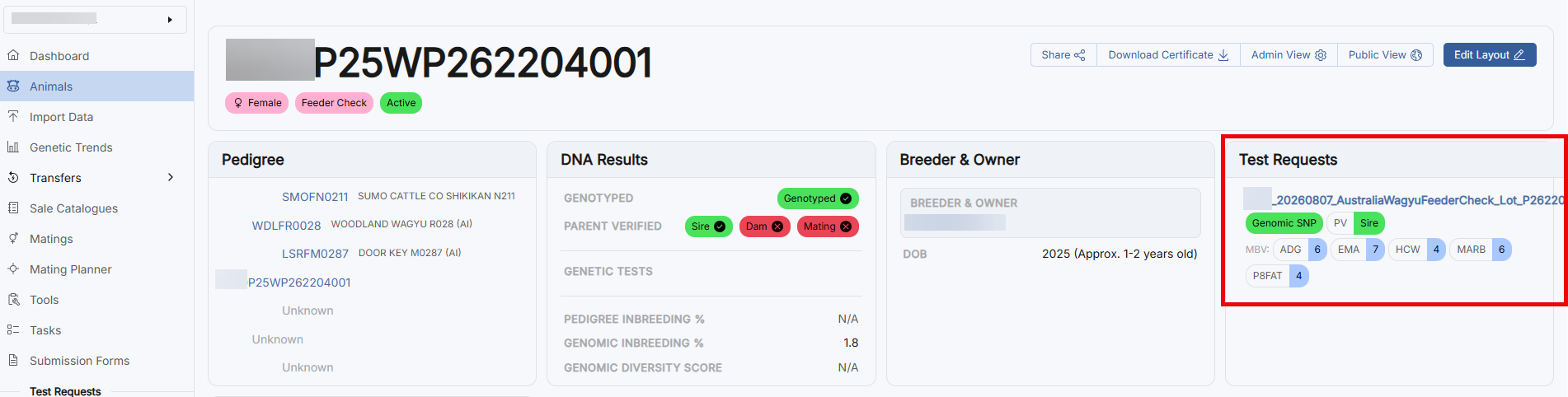
Results are also available on the individual animal record, providing quick access to an animal’s genomic predictions and sire verification information.
Reference Population
The genetic predictions generated through Wagyu Feeder Check are based on a genomic reference population, a large group of animals that have both genomic profiles (genotypes) and recorded performance data (phenotypes) available.
By comparing an animal’s DNA profile against this reference population, Wagyu Feeder Check can estimate its genetic potential for key production and carcase traits.
The reference population includes animals from a range of genetic backgrounds, with representation of Wagyu × Bos indicus, Wagyu × Holstein, and Wagyu × non-Angus Bos taurus cattle. This diversity improves the applicability of Wagyu Feeder Check across a wider range of commercial Wagyu production systems and production environments.
Sire Verification and Supply Chain Confidence
Sire verification is a key component of the Wagyu Feeder Check program.
Accurate sire verification provides confidence in pedigree records and strengthens the integrity of genetic evaluations. Correct sire identification ensures that carcase performance data can be accurately linked to breeding animals, allowing more reliable Wagyu Breeding Values (WBVs) to be calculated.
Beyond breeding benefits, sire verification also provides greater transparency throughout the supply chain. Producers, feedlots, processors, and customers can have increased confidence in the authenticity and traceability of Wagyu genetics, supporting the reputation of Australian Wagyu beef in domestic and export markets.
Why Register Animals and Submit Carcase Data?
The value of Wagyu Feeder Check extends beyond genomic testing. Registering tested animals in the Commercial Register and submitting carcase data allows genomic predictions to be linked with actual performance outcomes.
This connection is particularly important for improving the accuracy of Wagyu Breeding Values (WBVs). When carcase data is linked back to verified pedigrees, the information contributes to more robust genetic evaluations and supports genetic progress across the Australian Wagyu population.
In addition to supporting genetic improvement, producers may also benefit directly from contributing data.
A $4 cash payment is available for every animal that is registered in the Commercial Register and has carcase data recorded in Helical. For herds with multiple animals, these payments can quickly add up while also strengthening the industry’s reference population and data resources.
Recording Birth Date
To maximise the accuracy of analyses, animals should have a recorded date of birth when being registered. If the exact date is unknown, an approximate date, such as the first day of the birth month, is sufficient and preferable to recording only the birth year.
Supporting Genetic Improvement
By combining genomic predictions with actual carcase performance, producers gain deeper insights into how animals perform throughout the supply chain. At the same time, this data contributes to stronger genetic evaluations, more informed breeding decisions, and the ongoing advancement of the Australian Wagyu industry.
Registering animals and submitting carcase data helps ensure producers maximise the value of their Wagyu Feeder Check investment while contributing to industry-wide genetic improvement.
Submitting Wagyu Feeder Check Requests
Wagyu Feeder Check requests can be submitted through the Helical platform or by emailing [email protected]
Important Information
- All testing is done through Neogen
- Samples must be collected using Allflex/Neogen TSUs (Tissue Sample Units).
- Testing cannot be done on a sample already at the lab, a new sample must be collected
- Refer to the current Fee Schedule for testing costs
Further Wagyu Feeder Check Resources