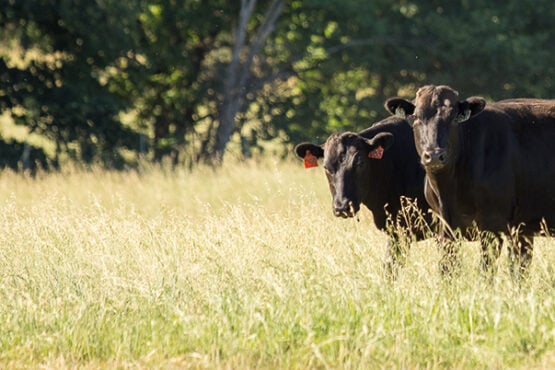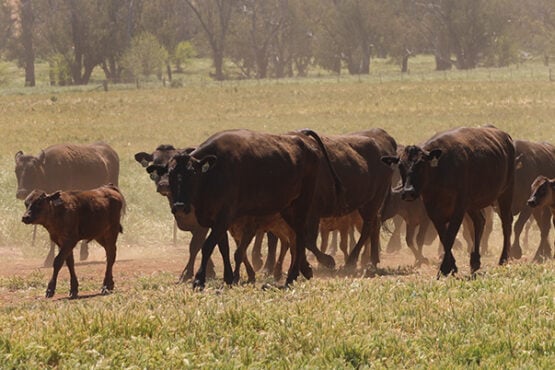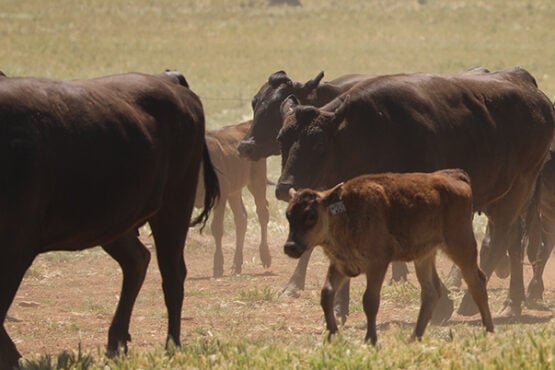
DNA trait testing helps breeders identify genetic variants associated with specific physical and production traits. The Australian Wagyu Association reports several DNA-tested traits, including horn status, coat colour, fat composition, and tenderness, allowing breeders to make more informed breeding and management decisions.
POLL (Horn Status)
The poll gene (Celtic polled allele) does not naturally occur in Japanese Black Fullblood Wagyu. It was introduced into purebred Wagyu populations through crossbreeding with naturally polled breeds, such as Angus.
The poll gene is dominant. Animals carrying one or two copies of the poll allele will be polled, while homozygous polled sires will pass the poll allele to all progeny.
Through poll gene testing, Wagyu breeders can identify whether animals are homozygous or heterozygous for the poll gene. This information is particularly valuable for breeding programs focused on increasing polledness within a herd.
Poll Testing Results
PePe: result shows two poll genes, this animal is homozygous polled and phenotypically polled.
HPe: result shows one poll gene and one horn, this animal is heterozygous polled and phenotypically polled.
HH: result shows two horn alleles, this animal is homozygous horned and phenotypically horned.
Registration Requirements
To register purebred animals with a horn status of polled, Australian Wagyu Association bylaws require DNA testing for the poll gene.
This test can be requested as:
- Part of a bundled testing package
- An add-on to Genomic SNP testing
- A standalone test
Testing is available through all approved DNA laboratories. Costs are outlined in the current Fee Schedule.
Coat Colour and Dilution Factor
Coat colour and dilution are determined through testing of genetic variants in the MC1R gene, which plays a key role in controlling pigmentation in the animal’s coat.
The MC1R gene influences the production of eumelanin (black pigment) and pheomelanin (red pigment), which together determine the base coat colour. Variants in this gene can result in animals expressing either black or red coat colouring.
In addition to base colour, dilution genes can modify how pigment is expressed. These genes affect the intensity of coat colour, leading to lighter or diluted variations. These dilution variants may include; grey, dun, silver dun, yellow or cream.
Coat Colour Results
| Code | Colour | Gene |
| ED | BLACK | Two copies of the dominant black gene. |
| ED/E+ | BLACK | One copy of the dominant black gene and one copy of the Wildtype* gene |
| ED/e | BLACK | One copy of the dominant black gene and one copy of the recessive red gene. |
| E+/e | RED | One copy of the wildtype* gene and one copy of the recessive red gene. |
| E+E+ | VARIED | Two copies of the wildtype* gene. |
| e/e | RED | Two copies of the recessive red gene. |
Dilution Factor Results
| Code | Colour | Gene |
| N | Non-Carrier | No copies of the dilutor gene – Animal will be Red or Black. |
| C | Carrier | One copy of the dilutor gene present – Animal classified as Red (Grey). |
| A | Affected | Two copies of the dilutor gene – Animal classified as Red (Grey). |
Stearoyl- Coa Desaturase (SCD)
Stearoyl-CoA Desaturase(SCD) is a gene associated with fat composition in cattle. The SCD enzyme plays a key role in converting stearic acid into oleic acid, influencing the characteristics of intramuscular fat (marbling).
- Stearic acid is a saturated fatty acid that contributes to firmer fat and a higher melting point
- Oleic acid is a monounsaturated fatty acid associated with softer fat and a lower melting point
Variation in the SCD gene can influence the proportion of these fatty acids, which may affect eating quality, flavour, mouthfeel, and overall beef palatability.
The SCD test identifies two allele types:
- A allele – associated with higher levels of oleic acid and softer fat.
- V allele – associated with higher levels of stearic acid and firmer fat.
Animals inherit one allele from each parent, resulting in one of three possible genotypes:
- AA – greater genetic potential for increased oleic acid levels.
- AV – intermediate expression of the trait.
- VV – greater genetic potential for increased stearic acid levels.
SCD testing can help breeders:
- Gain insights into the genetic potential of animals for fat composition.
- Support selection decisions aimed at improving eating quality traits.
- Complement other carcass and meat quality assessments.
- Make more informed breeding decisions using genetic information.
Important: SCD results indicate genetic potential only. Fat composition and eating quality are also influenced by nutrition, management, environment, and processing factors
Tenderness
Tenderness DNA testing estimates an animal’s genetic potential for tenderness and eating quality. The test identifies genetic markers associated with tenderness, which is commonly measured using the Warner-Bratzler Shear Force (WBSF) test. This test measures the force required to cut through cooked beef, with lower shear force values indicating more tender meat.
Tenderness is an important eating-quality trait that contributes to consumer satisfaction and can be influenced by both genetics and management factors. While factors such as nutrition, handling, and processing affect final meat quality, DNA testing helps identify animals with a favourable genetic predisposition for tenderness.
Results are reported on a scale of 1–10, with:
- Higher scores indicating greater tenderness
- Lower scores indicating less tender meat
- These results can be used alongside other performance and carcass traits to support breeding decisions aimed at improving overall beef quality.
Tenderness testing can help breeders:
- Select animals with a favourable genetic potential for meat quality
- Improve eating quality outcomes in future generations
- Complement selection for other economically important production traits
- Make more informed breeding decisions using genetic information
Important: Tenderness DNA results indicate genetic potential only. Actual meat tenderness is also influenced by environmental and management factors throughout the animal’s life and during processing.