Recording Contemporary Groups

Recording Contemporary Groups

What is a Contemporary Group? 

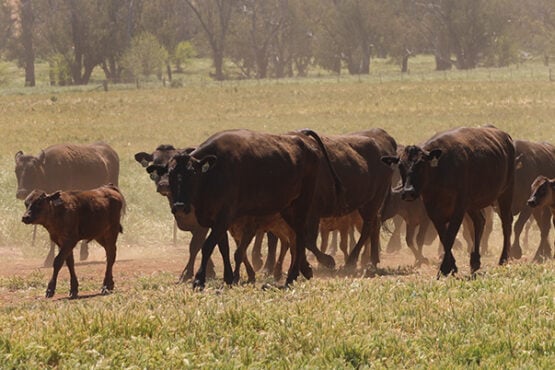
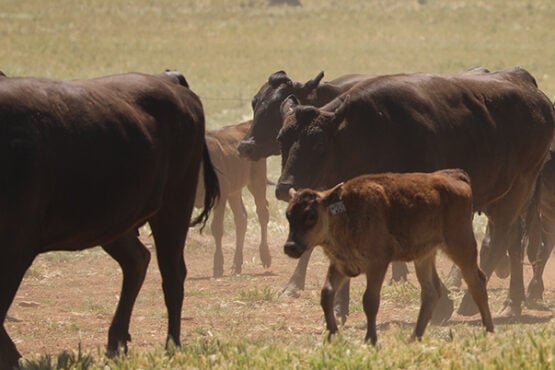
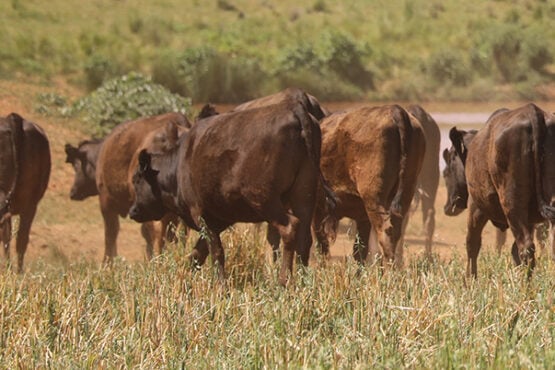
Contemporary groups within performance recording are a group of individual animals who have had equal opportunity to perform. They have been run under the same conditions and are comparable amongst one another within the analysis for any trait observed and recorded by the breeder. 

How does a Contemporary Group form? 

A contemporary group is automatically formed (generally) based on the following: 

  • Herd of measurement 
  • Birth year 
  • Embryo transfer (ET) vs natural and AI 
  • Twin-born vs single-born 
  • Sex 

Then there are factors that are influenced by the breeder that further contribute to group formation: 

  • Observation date (the date the animals were weighed or measured) 
  • Age slicing or Calf age spread (age of oldest animal vs the age of youngest, generally being 45 day split for early in life traits and 60 day slit for later in life e.g. carcase data) 
  • Sex (bulls vs steers) 

Contemporary groups can be further influenced by information provided by the breeder through: 

  • Management Groups (breeder defined) 

What is a Management Group, how do I define it, and do I really need one? 

A management group provided by the breeder further separates a group of animals who have performed under different non-genetic factors. A management group is a three-character reference you provide on your performance submission to indicate if an individual or group of animals have been treated differently to the others. These are factors beyond those listed above.  

For example, you might choose to define a management group based on: 

  • Injury/Illness. 
  • Grain fed vs pasture fed. 
  • A mob split over different properties with different environments (pasture quality, seasonal factors). 

An example of defining a management group on your performance data submission would be an animal who was removed from the main mob to be treated for injury. This could be identified on your performance submission form using a management group code: INJ. 

Why should I manage my animals to maximize contemporary group size.  

Maximizing contemporary group size increases the reliability, accuracy, and fairness of genetic evaluations by providing stronger comparisons among animals raised under the same environmental conditions. This results in more accurate WBVs and better breeding decisions. 

Benefits of Larger Contemporary Groups 

Separates genetics from environment 

  • Animals raised under the same conditions experience similar environmental effects. 
  • Larger groups make it easier to determine whether performance differences are due to genetics rather than management or environmental variation. 

Increases accuracy of Wagyu Breeding Values (WBVs) 

  • More animals within a group provide more data points.
  • This allows genetic evaluation systems to estimate an animal’s genetic merit with greater confidence.

Improves ranking of animals 

  • Larger groups help distinguish superior and inferior genetics more reliably.
  • Breeders can make better selection decisions.

Reduces bias 

  • Small groups can be heavily influenced by unusual environmental factors or individual animal effects. 
  • Larger groups reduce the impact of these random influences. 

Enhances connectedness between herds 

  • When large contemporary groups are linked through common sires or genetics, comparisons across herds and years become more accurate. 

How large is an effective Contemporary Group 

As contemporary group size increases, the accuracy of Wagyu Breeding Values (WBVs) also improves because more animals are available for comparison. However, the benefit does not increase indefinitely. 

The greatest gains occur when moving from very small groups to moderate-sized groups: 

  • 2–5 animals: minimal accuracy 
  • 10–20 animals: substantial improvement 
  • 20–40 animals: higher accuracy 
  • Above 40 animals: further improvement occurs, but at a much slower rate 

In other words, the returns begin to diminish once groups reach around 20–40 animals. 

Management Still Comes First 

While larger groups are generally better, accurate grouping is more important than group size alone. Breeders should never combine animals that have been managed differently simply to create a larger group. Two correctly defined groups of 20 animals will provide more reliable information than one poorly defined group of 40 animals.  

Key Take-Home Message 

The biggest gains in genetic evaluation accuracy come from increasing contemporary group size from small numbers to around 20–30 animals. Beyond that point, improvements continue but at a diminishing rate. For most breeders, the goal should be to maintain the largest possible contemporary groups while ensuring all animals have had an equal opportunity to perform 
RELATED

The 200-day weight is the liveweight of animals recorded at approximately 200 days of age and is a key measure of early growth, reflecting calf performance prior to weaning.
The 400-day weight is the liveweight of animals recorded at approximately 400 days of age. It provides an indication of growth performance through the yearling stage and how animals continue to perform post-weaning.
The 600-day weight is the liveweight of animals recorded at approximately 600 days of age. It provides an indication of growth performance beyond early development and how animals perform within your production system.
Scrotal circumference is the round measurement of a bulls testicles in centimeters. Measurements can be collected on bulls between 300 and 700 days of age. Scrotal circumference is an important indicator of male fertility and is favourably correlated with female reproductive performance.

CATEGORIES

IMPORTANT NOTICE - Terms & Conditions


It is a condition of use of this database that you accept these terms and conditions. 

It is important that you appreciate when accessing the Australian Wagyu Association Limited (AWA) database (which may be hosted on an external website) that the information contained on the AWA database, including but not limited to pedigree, DNA information, Wagyu Breeding Values (WBVs) and Index values (together called Database Information), is based on data supplied by AWA members and/or third parties. 

Whilst sincere effort is made to ensure the Database Information is accurate and complete, to the extent permitted by law, AWA, its officers and employees, shall not be responsible for its use or interpretation, and you use the Database Information at your own risk. Please be aware of the following limitations of the Database Information.  

Regarding WBVs and Index values, it is important to appreciate, and you need to be aware that: 

  • WBVs are derived using genetic evaluation technology developed for the AWA, using information contained within the AWA database and parameters derived from it.
  • WBVs are estimates of genetic potential of individual animals and may change with addition of new data or with new parameters.
  • WBVs are genetic merit estimates only and may not reflect the raw animal phenotype.
  • WBVs can only be directly compared to other WBVs calculated in the same AWA genetic analysis.

Regarding pedigree and DNA testing results submitted to the AWA, it is important to appreciate, and you need to be aware that: 

  • Animals whose registration identifiers start with PED are Pedigree Recorded Animals. What this means is that the details which AWA used to register the animal were obtained from a Recognised Wagyu Registry Organisation – in other words a Wagyu breed association based outside of Australia. AWA has not independently verified the information with respect to the animal or the details recorded about the animal. You should read AWA’s by-laws which set out details regarding the definition of a Pedigree Recorded Animal. 
  • Pedigree and DNA data submitted and supplied to AWA may have errors in it which cannot be detected without further DNA testing. 
  • Technology may have advanced since a particular test was undertaken so that genetic issues or inaccuracies which were previously not detectable are now able to be detected by current testing technology (i.e. if the animal was tested again with current technology). 
  • AWA estimates that less than 1% of the pedigree entries, ownership or breeding details in the AWA Herdbook may have errors or which may be misleading. For this reason, users ought to consider if they need to obtain independent testing of the relevant animal (if possible) to ensure that the data is accurate. 

Regarding prefectural content, it is important to appreciate, and you need to be aware that: 

  • Prefectural content is based on the estimation of prefectural origin from Japanese breeding records of 201 foundation sires and 168 foundation dams. As genotype-based parent verification is not used in Japan, and full Japanese registration certificates are not available for all foundation animals, exact prefectural composition for these sires and dams cannot be validated. 
  • The calculation of prefectural content for Australian Herdbook animals relies on the accuracy of pedigree records and DNA samples provided by AWA members.   

Regarding DNA testing and genetic condition results submitted to the AWA, it is important to appreciate, and you need to be aware that: 

  • As genetic testing results are provided by independent DNA testing laboratories at the request of AWA members, AWA relies solely on the accuracy of the reporting of genetic testing as completed by the laboratories. 
  • AWA uses GeneProb software to calculate the likelihood of pedigree animals being a carrier of genetic conditions.  This likelihood is an estimate based on the available genetic testing results. 

If you consider that you do not understand or appreciate the nature and/or implications of the data provided on this website or the WBVs of a particular animal, then AWA strongly recommends that you seek expert advice.  Note there is substantial technical information and articles on the Wagyu website to assist our members. 

AWA’s liability for any loss or damage, consequential or otherwise, suffered or incurred by you or your related business, arising directly or indirectly from your use of Database Information, to the extent permitted by law, is limited to AWA providing you with a refund for the fees paid for the service (if any), or AWA re-performing the service, where possible, at the election of AWA.  

AWA administers this database in good faith to support AWA members and the industry. AWA does not represent or warrant that the animals recorded in this database, or animals breed from them, will achieve any particular genetic or phenotype performance.


THIS DISCLAIMER HAS BEEN UPDATED AS OF 03/02/2026, PLEASE ENSURE YOU HAVE READ IT IN DETAIL